

Powerhouse EA V3.06 MT4: The Unvarnished Truth Behind the Hype
In the vast and often confusing world of Forex trading, automated tools known as Expert Advisors (EAs) promise a path to consistent profits without the emotional stress of manual trading. One name that circulates in online forums and trading communities is Powerhouse EA V3.06 MT4. It suggests strength, reliability, and performance. But what is the reality behind this trading robot, and can it live up to its powerful name?
This in-depth review will cut through the noise. We will investigate the likely strategy behind Powerhouse EA V3.06, analyze the significant red flags that every trader must be aware of, and provide a clear framework for evaluating high-risk automated systems. Before you consider letting this or any EA trade your capital, this is the essential due diligence you need to perform.
Deconstructing the “Powerhouse”: What is its Trading Strategy?
Unlike some EAs, Powerhouse EA V3.06 does not have a clearly defined, official vendor website providing transparent details about its strategy. However, by piecing together information from various online sources and observing its behavior as described in user discussions, a clear picture emerges. Powerhouse EA appears to operate on a grid or martingale strategy.
What does this mean?
- Grid Trading: A grid strategy places a series of buy and sell orders at predefined intervals above and below the current price. The goal is to profit from market volatility, closing trades as the price moves through the “grid.” It doesn’t rely on predicting the market’s direction.
- Martingale Strategy: This is a high-risk money management technique. When a trade loses, the next trade is opened with a doubled lot size. The aim is to recover all previous losses plus a small profit with a single winning trade.
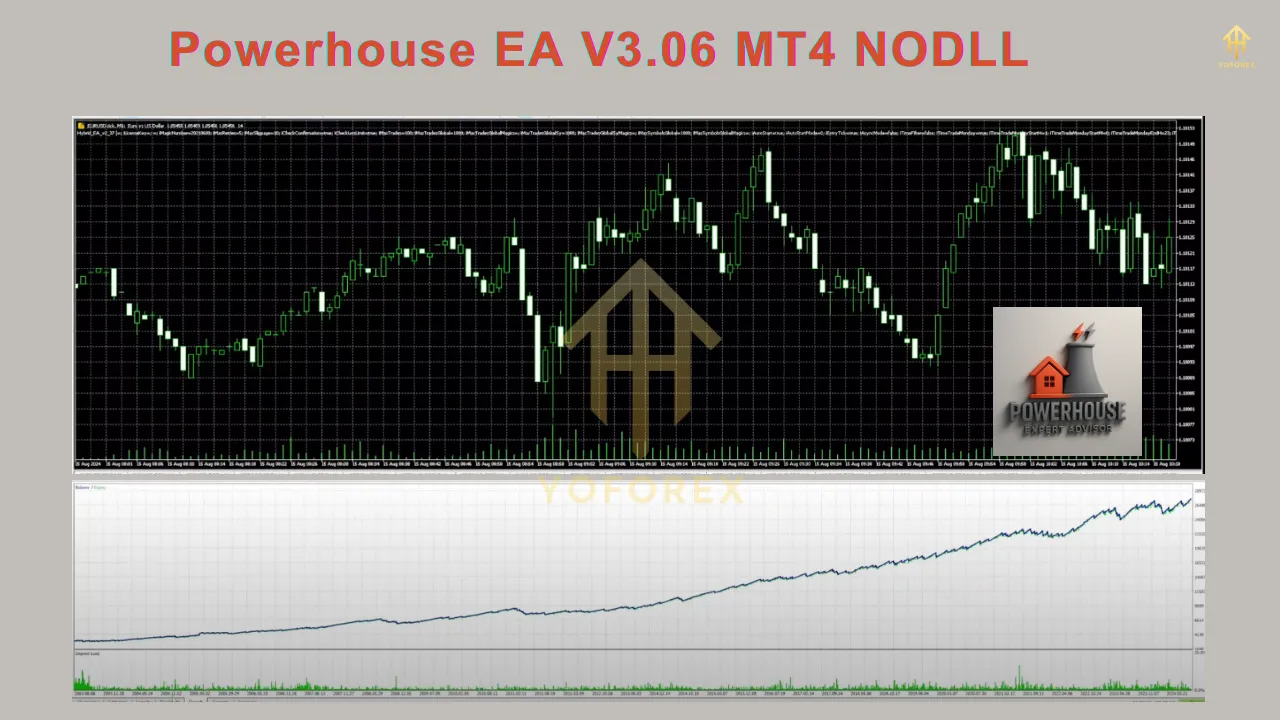
When combined, a grid-martingale EA like Powerhouse V3.06 will open a series of trades as the market moves against its initial position, often increasing the lot size of each subsequent trade. This creates an alluringly smooth equity curve with many small wins, as the system can absorb small losses and turn them into profits. However, this strategy has a catastrophic, built-in flaw.
The Inherent Risk: The Unavoidable Margin Call
The core danger of a grid-martingale strategy is that it requires a market that eventually reverses. In a strong, sustained trend—which happens frequently in the Forex market, especially during major news events—the EA will continue to open larger and larger positions against the trend. This leads to a rapidly exploding drawdown. The account’s margin is consumed until it can no longer support the massive losing positions, resulting in a margin call and the complete loss of the trading account.
This isn’t a possibility; it’s a mathematical certainty if the EA is left unchecked in the wrong market conditions. The question is not if it will blow an account, but when.
Red Flags: What the Evidence Shows
A responsible investigation into any EA involves looking for verified, long-term proof of performance. When it comes to Powerhouse EA V3.06, the search reveals several significant red flags:
- No Official Vendor: The lack of a professional, official website is a major warning. Legitimate software developers stand behind their products with clear documentation, support channels, and transparent pricing. The absence of this suggests the EA may be an outdated or unsupported piece of software being shared or sold on third-party sites.
- Deleted Myfxbook Records: Myfxbook is a third-party service that allows traders to connect their accounts and have their performance independently verified. A search for “Powerhouse EA” reveals accounts that have been deleted. Traders often delete their public records when the EA performs poorly or blows the account, as it is irrefutable proof of failure.
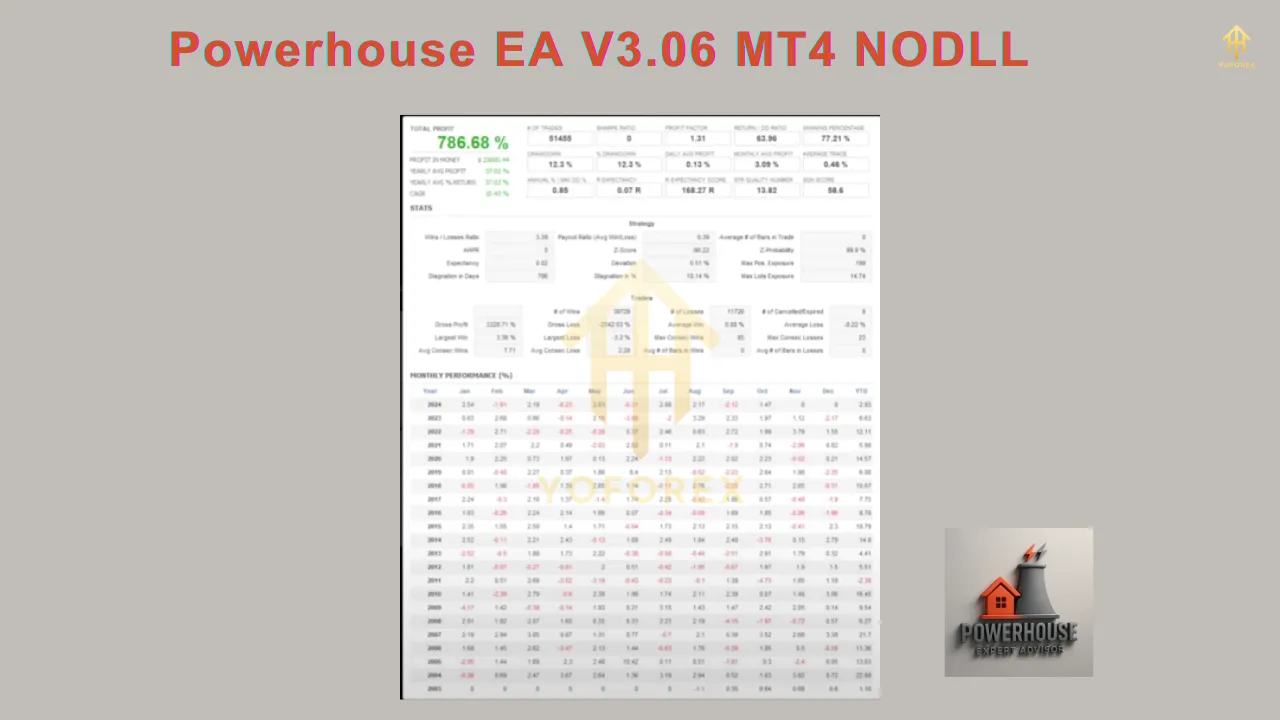
- High-Drawdown Public Records: Other public accounts linked to a “Powerhouse” strategy show devastating drawdowns, some exceeding 80%. This is consistent with the failure point of a martingale strategy and serves as a stark, public warning of the risks involved.
- Reliance on YouTube Hype: Much of the “proof” of this EA’s performance comes from YouTube videos, which can be easily manipulated. Backtests can be curve-fitted to show perfect results, and demo accounts do not reflect the harsh realities of live trading with real spreads and slippage.
How to Evaluate a High-Risk EA (A Trader’s Survival Guide)
If you still find yourself tempted by the promise of a high-risk, high-reward system, you must approach it with extreme caution and a rigorous evaluation process.
- Demand Long-Term, Verified Results: Do not accept backtests or screenshots. Insist on a Myfxbook or FXBlue link to a live, real-money account that has been running for at least one year. This allows you to see how the EA performed through various market conditions.
- Analyze the Drawdown: The maximum drawdown is the most important metric for a grid-martingale EA. If the drawdown has ever exceeded 50%, it’s a clear sign the EA has come close to blowing the account. Ask yourself if you can emotionally and financially withstand such a loss.
- Understand the Capital Requirements: These EAs require immense capital to survive drawdowns. Running such a system on a small account is a recipe for disaster.
- Start on a Demo Account: Before anything else, run the EA on a demo account for several months. This will help you understand its trading frequency, the currency pairs it works on, and how quickly its risk can escalate.
- Use a Micro Account for Live Testing: If you decide to proceed, test it on a live account with the smallest possible amount of capital that you are fully prepared to lose. This is not an investment; it is the cost of testing.
The Final Verdict: A Dangerous Game Not Worth Playing
While the name “Powerhouse EA V3.06 MT4” evokes a sense of strength, its underlying strategy is one of extreme fragility. The grid-martingale approach is a well-known account killer that preys on the hope of traders looking for an easy solution. The lack of verifiable evidence, coupled with clear signs of failed public accounts, makes this EA a dangerous proposition.
True power in trading comes not from a black-box robot but from knowledge, sound risk management, and a trading strategy that you understand and control. Rather than risking your capital on a system designed to eventually fail, invest your time and resources in learning sustainable trading methods. The allure of quick, automated profits is strong, but the preservation of your trading capital should always be your number one priority.