


Unearthing the Secrets of Automated Gold Trading: A Deep Dive into the “Gold of the Incas EA V1.6 MT4”
In the fast-paced world of Forex and precious metals trading, the allure of automated solutions that promise precision and profitability is undeniable. Among the myriad of expert advisors (EAs) available to retail traders, the “Gold of the Incas EA V1.6 MT4” emerges with a particularly intriguing proposition. It claims to leverage advanced algorithms to navigate the volatile currents of the market, focusing on tick-by-tick price action within the M5 timeframe. This EA asserts a sophisticated approach, dynamically adjusting its strategy in real-time and, notably, shunning the high-risk methodologies of grid and martingale systems.
This article delves deep into the claimed features and underlying concepts of the Gold of the Incas EA V1.6. We will dissect its purported trading style, explore the significance of its chosen instruments and timeframe, and ultimately, address the crucial question of verifiable performance in the often-opaque market of trading robots.
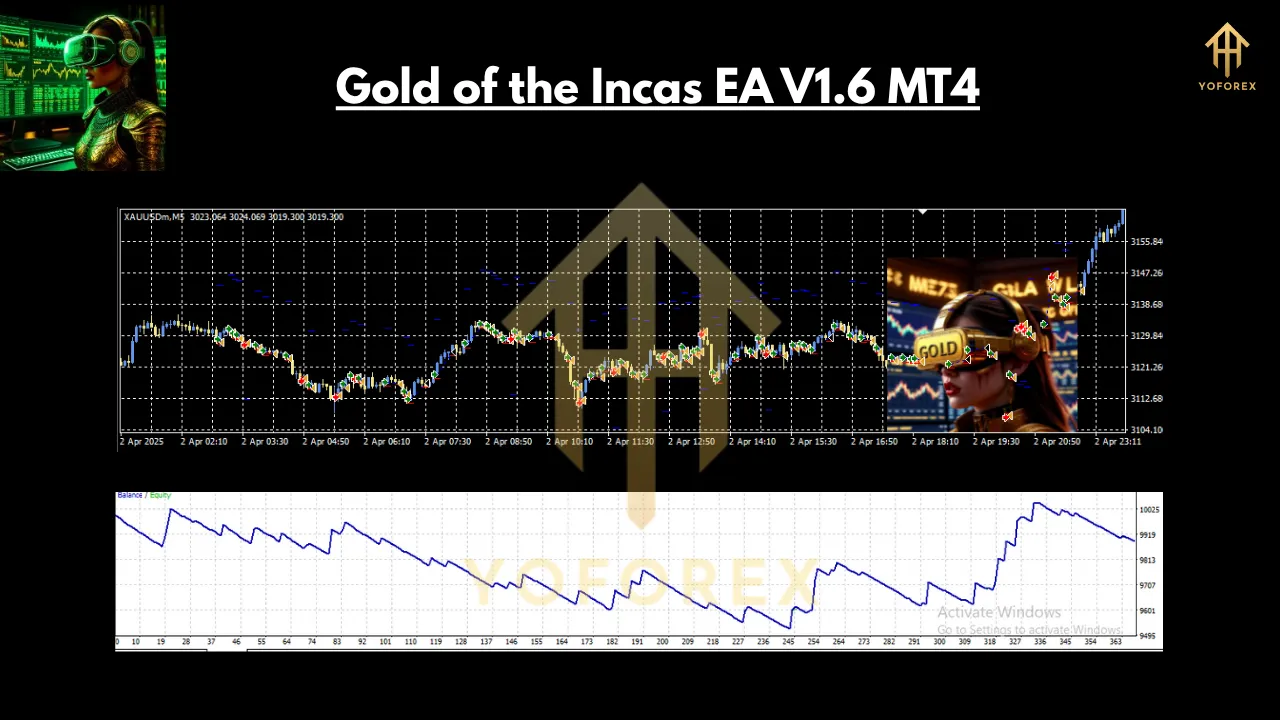
A Glimpse into the “Gold of the Incas”
The “Gold of the Incas EA V1.6” is presented as a specialized tool for the MetaTrader 4 platform, one of the most popular trading platforms in the retail forex industry. Its core appeal lies in its supposed ability to trade with a high degree of precision and adaptability, primarily on XAUUSD (Gold) and major currency pairs like EURUSD, GBPUSD, and USDJPY.
The developer highlights several key features that set it apart:
- Recommended Timeframe: M5: This focus on the 5-minute chart suggests a scalping or short-term day trading strategy, aiming to capitalize on small, frequent price movements.
- Advanced Algorithmic Analysis: The EA is said to analyze tick-by-tick price action, the most granular level of market data, to make its trading decisions.
- Dynamic Entry and Exit Criteria: Unlike many EAs that operate with fixed parameters, the “Gold of the Incas” allegedly adjusts its trading logic based on prevailing market volatility and trend strength.
- No Grid or Martingale: This is a significant claim, as it distances the EA from strategies that can lead to catastrophic losses by progressively increasing trade size in losing positions. The focus is on what is described as a “pure strategy-driven” approach.
Deconstructing the Trading Methodology
To truly understand the potential of an EA like the “Gold of the Incas,” we must look beyond the marketing claims and analyze the trading concepts it professes to use.
The Intricacies of Tick-by-Tick Analysis on the M5 Timeframe
Trading on the M5 timeframe, especially with a volatile instrument like gold, is a high-stakes endeavor. By analyzing tick-by-tick data, the EA is, in theory, reacting to every single trade that occurs in the market. This provides a microscopic view of price action, allowing for potentially very precise entries. For a scalping strategy, this can be the difference between a profitable trade and a losing one.
However, this approach is not without its challenges. Tick data can be noisy, filled with false signals and minor fluctuations that don’t necessarily indicate a true market trend. An effective tick-based EA must possess a sophisticated filtering mechanism to distinguish meaningful price movements from this background noise. Furthermore, the computational demands of processing every tick in real-time are substantial, requiring a robust and low-latency trading environment.
The Power of Dynamic Adaptation
The claim of dynamic entry and exit criteria is perhaps the most compelling feature of the “Gold of the Incas EA.” A static trading strategy, one that uses the same take-profit, stop-loss, and entry signals regardless of market conditions, is brittle. A strategy that works well in a trending market may fail miserably in a ranging one.
By dynamically adjusting to volatility and trend strength, the EA could theoretically:
- Widen its take-profit targets during strong trends to maximize gains.
- Tighten its stop-losses in volatile markets to minimize risk.
- Employ different entry logic for breakouts versus range-bound scenarios.
This adaptability, if implemented effectively, would represent a significant leap over more simplistic EAs. It suggests a system that is designed to be more resilient and responsive to the ever-changing personality of the market.
The Prudence of a “No Grid, No Martingale” Approach
The explicit rejection of grid and martingale strategies is a major green flag for any risk-conscious trader.
- Martingale strategies involve doubling down on a losing trade with the hope that an eventual reversal will recover all previous losses and generate a small profit. While this can lead to long winning streaks, a single prolonged trend against the position can wipe out an entire account.
- Grid strategies place a series of buy and sell orders at predefined intervals around a set price level. While they can be profitable in ranging markets, a strong trend can leave a trail of losing trades that quickly accumulate.
By committing to a “pure strategy-driven” approach, the “Gold of the Incas EA” implies that each trade is based on a unique market setup with its own defined risk and reward, rather than being part of a predetermined, high-risk sequence. This is a far more sustainable approach to long-term automated trading.
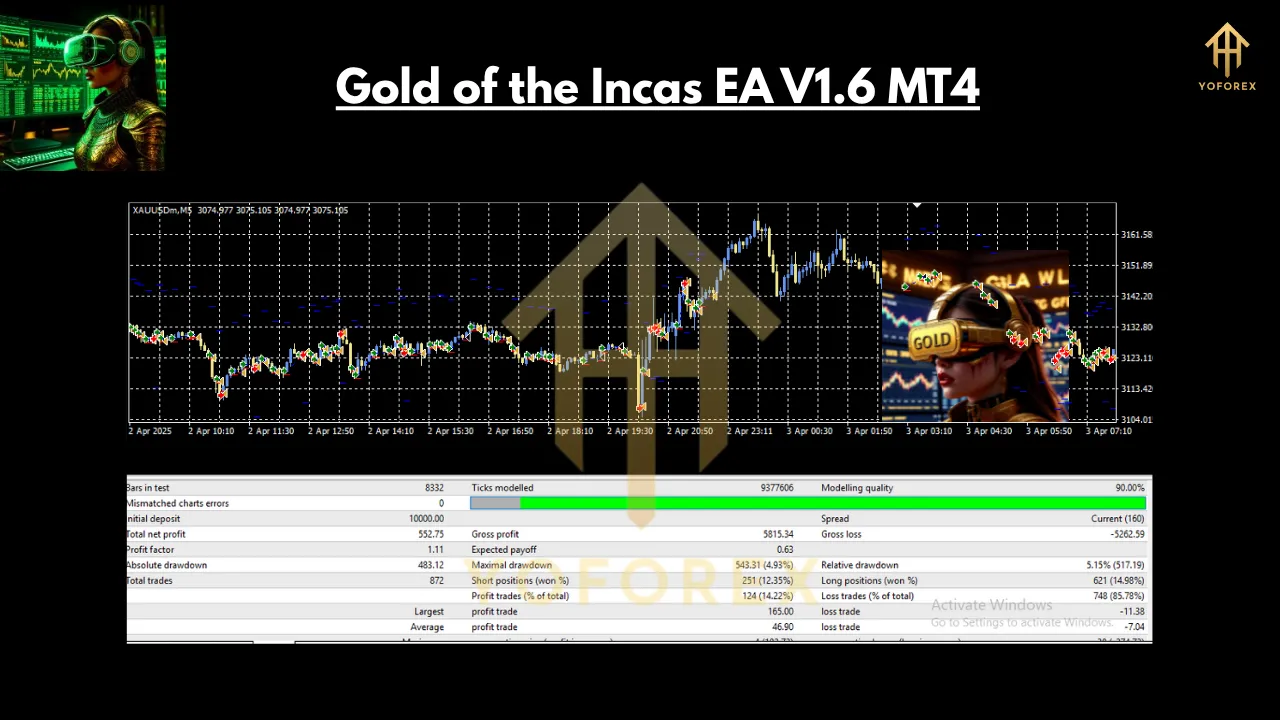
The Critical Missing Element: Verifiable Performance
For all its sophisticated claims and theoretically sound trading principles, there is a significant lacuna when it comes to the “Gold of the Incas EA V1.6”: a lack of independent, verifiable performance data. Searches for user reviews, forum discussions on reputable platforms, and publicly available, tracked results on services like Myfxbook or FxBlue yield little to no concrete information.
On the MQL5 marketplace, a “Gold of the Incas” EA by a developer named “Dmitriq Evgenoeviz Ko” is listed at a premium price, which lends some credence to its existence as a commercial product. However, without a transparent and long-term track record, potential users are left to take the developer’s claims at face value.
This is a critical point that cannot be overstated. In the world of expert advisors, promises are easy to make, but proof is paramount. A compelling narrative and a high price tag are not substitutes for a verified history of consistent profitability and controlled drawdown.
A Trader’s Guide to Evaluating EAs with Limited Data
So, how should a discerning trader approach an expert advisor like the “Gold of the Incas”?
- Demand Transparency: Before even considering a purchase, a trader should look for verified performance data. If the developer is unwilling or unable to provide this, it should be considered a major red flag.
- Scrutinize Backtests: If backtests are provided, they should be of high quality (99.9% modeling quality) and cover a long period with various market conditions. Be wary of perfectly linear equity curves, as these can be the result of over-optimization.
- Seek Independent Reviews: Look for reviews on trusted forex forums and websites. Be cautious of overly positive reviews on the seller’s own website.
- Start with a Demo Account: If you do decide to test the EA, always run it on a demo account for an extended period. This will allow you to observe its behavior in a live market environment without risking real capital.
- Understand the Strategy: Do not trade with an EA whose strategy you do not understand. The insights in this article about tick-based trading and dynamic parameters should serve as a starting point for your own due diligence.
The Verdict: An Enigma with Potential
The “Gold of the Incas EA V1.6 MT4,” as described, presents a compelling vision for what an intelligent automated trading system should be. Its purported focus on dynamic adaptation, tick-level precision, and a rejection of high-risk money management strategies aligns with the principles of prudent and sophisticated trading.
However, a vision, no matter how compelling, requires substantiation. The current lack of verifiable data and independent user feedback surrounding this particular expert advisor makes it an enigma. While the concepts it claims to employ are sound, the execution and real-world performance remain a mystery.
For the aspiring automated trader, the “Gold of the Incas EA” serves as a valuable case study. It teaches us to look for sophistication in strategy but to demand simplicity and transparency in proof. Until the treasures of its performance are brought into the light for all to see, this EA will likely remain a legend whispered in the digital marketplace, a tantalizing yet unproven path to the fabled gold of the markets.