The Alchemist’s Code: Can CandleMaster Pro EA and Neural Networks Truly Master the Market?
In the ever-evolving world of forex trading, the allure of a “set and forget” solution that generates consistent profits is a powerful one. This siren song has led many a trader to the shores of automated trading systems, or Expert Advisors (EAs) as they are known in the popular MetaTrader 4 (MT4) platform. A name that has recently surfaced in this domain is CandleMaster Pro EA, with its latest iteration, V2.65, promising a unique approach to conquering the markets. But what lies beneath the bold claims of this trading robot, and can it live up to the hype?
The promotional material for CandleMaster Pro EA V2.65 paints a compelling picture: an advanced trading solution that harnesses the power of neural networks to identify Japanese candlestick patterns with high accuracy. This, combined with integrated technical indicators for market entry control, is presented as the culmination of years of successful trading experience distilled into a precise mathematical algorithm.
While specific, verifiable details, user reviews, and performance data for “CandleMaster Pro EA V2.65 MT4” are scarce across the vast plains of the internet, the concepts it purports to leverage are at the very cutting edge of retail trading technology. This scarcity of information should itself be a cautionary flag for any potential user. However, the underlying principles of using neural networks to trade candlestick patterns are a fascinating and increasingly relevant topic for any serious trader.
This article will delve into the core components of such a trading philosophy, exploring the potential and the pitfalls of entrusting your capital to an algorithm, and what you should look for in any EA that claims to have mastered the ancient art of candlestick reading through the modern science of artificial intelligence.
The Enduring Power of Japanese Candlestick Patterns
For centuries, Japanese rice traders used candlestick charts to visually represent price movements and the prevailing market sentiment. Each candle tells a story of the battle between buyers (bulls) and sellers (bears) over a specific period. The body of the candle represents the opening and closing prices, while the wicks (or shadows) show the highest and lowest prices reached.
The true power of candlestick analysis lies in the patterns formed by one or more candles. Formations like the Doji, Hammer, Engulfing Pattern, and Morning Star are not just abstract shapes; they are graphical representations of market psychology. A long lower wick on a Hammer, for instance, suggests that sellers initially pushed the price down, but buyers stepped in with force to close the price higher, indicating a potential bullish reversal.
An EA that can accurately and consistently identify these patterns in real-time could, in theory, gain a significant edge. The challenge, however, is that candlestick patterns are not an exact science. Their effectiveness often depends on the context of the preceding trend, the overall market environment, and confirmation from other technical indicators. This is where the promise of neural networks comes into play.
Neural Networks: The Brains Behind the Operation?
A neural network is a sophisticated form of artificial intelligence (AI) that is loosely modeled on the human brain. It consists of interconnected nodes, or “neurons,” organized in layers. These networks can be trained on vast amounts of data to recognize complex, non-linear patterns that would be difficult for humans or traditional programming to define.
In the context of a trading EA like CandleMaster Pro, a neural network could be “trained” on historical price data to identify not just the textbook definitions of candlestick patterns, but also the subtle variations and nuances that often precede significant price movements. The network could learn to differentiate between a high-probability Engulfing Pattern that forms at a key support level and a less reliable one that appears in the middle of a ranging market.
By integrating other technical indicators, such as moving averages, RSI, or MACD, the neural network could further refine its entry and exit signals. For example, it might only take a trade based on a bullish candlestick pattern if the RSI is in oversold territory and the price is above a long-term moving average, thereby filtering out lower-probability setups.
The Quest for the “Holy Grail”: Promises and Perils
The combination of candlestick pattern recognition and neural network analysis represents a significant leap forward in automated trading. The potential benefits are clear:
- Speed and Efficiency: An EA can scan multiple currency pairs and timeframes simultaneously, identifying potential setups far faster than any human trader.
- Objectivity: By adhering strictly to its programmed rules, an EA removes the emotional element of trading, such as fear and greed, which can often lead to poor decision-making.
- 24/7 Market Monitoring: The forex market operates around the clock, and an EA can tirelessly monitor for opportunities, even while the trader is asleep.
However, the path to profitable automated trading is fraught with challenges:
- Over-Optimization: An EA can be “curve-fitted” to perform exceptionally well on historical data, but fail to adapt to changing live market conditions.
- Lack of Transparency: Many commercial EAs, including the sparsely documented CandleMaster Pro, are “black boxes.” Users may not fully understand the underlying logic, making it difficult to assess the risks involved.
- The “No Holy Grail” Principle: No trading system, no matter how advanced, can guarantee profits. The forex market is a complex and dynamic environment, and even the most sophisticated algorithms can experience losing streaks.
Due Diligence: Your Shield in the World of EAs
Before considering the purchase of any EA, especially one with a limited public track record like CandleMaster Pro EA V2.65, a thorough due diligence process is essential. Here are some key things to look for:
- Verified Track Record: Look for EAs with performance verified by third-party services like Myfxbook or FXBlue. This provides a transparent and audited history of the EA’s performance on a live trading account.
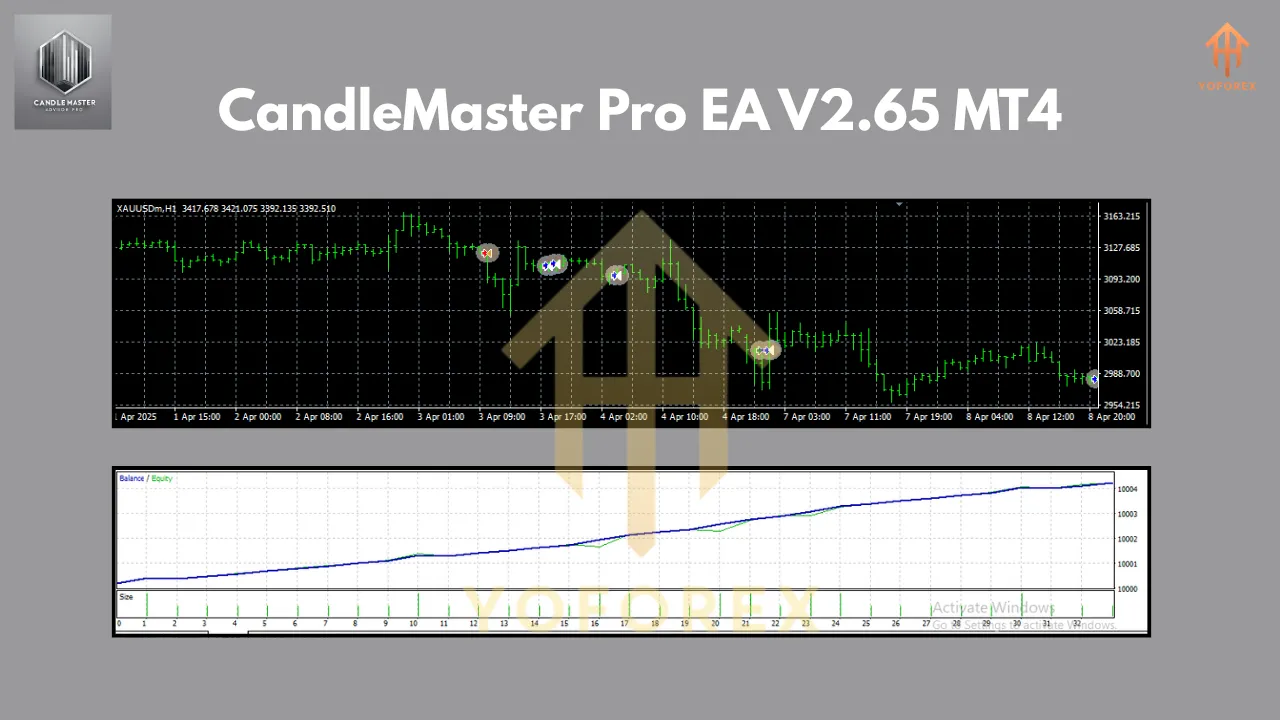
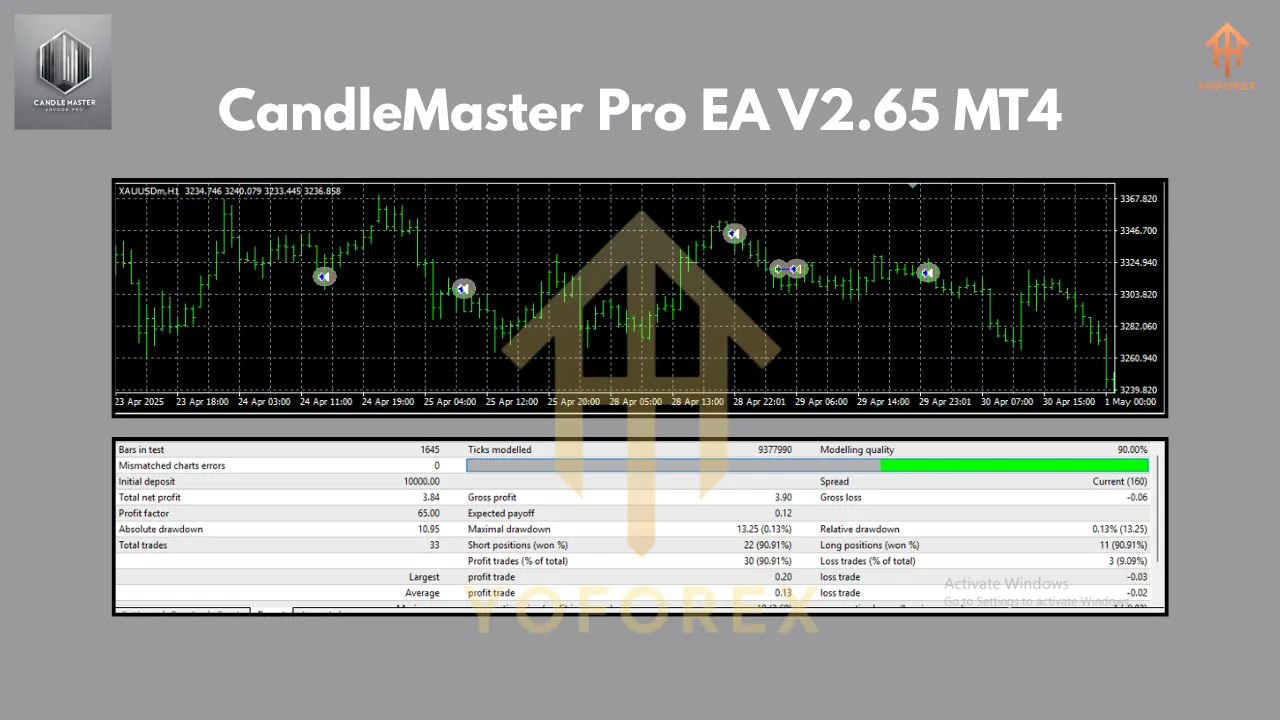
- Extensive Backtesting: The developer should provide comprehensive backtesting results across various currency pairs and timeframes, demonstrating the EA’s robustness in different market conditions.
- User Reviews and Community Feedback: Search for independent reviews on reputable forex forums and communities. Real user experiences can provide invaluable insights into an EA’s strengths and weaknesses.
- Clear Strategy Explanation: While the exact parameters may be proprietary, the developer should provide a clear explanation of the EA’s trading strategy. Understand what makes it tick before you let it trade with your money.
- Vendor Reputation and Support: Is the vendor reputable and do they offer responsive customer support? This can be crucial if you encounter any issues with the EA.
The Final Verdict on CandleMaster Pro EA V2.65
Given the current lack of publicly available, verifiable information, it is impossible to definitively say whether CandleMaster Pro EA V2.65 is a revolutionary trading tool or just another over-hyped product. The concepts it claims to utilize are sound and represent the future of automated trading. However, without a proven track record and transparent performance data, potential buyers should proceed with extreme caution.
The world of forex EAs is a realm where promises of untold riches are common, but the reality is often far more sobering. The true “mastery” of the market lies not in a single piece of software, but in a deep understanding of market dynamics, a robust risk management strategy, and a healthy dose of skepticism. While tools like CandleMaster Pro may one day prove their worth, the prudent trader will always prioritize education and thorough research over blind faith in an algorithm.