
Navigating the Uncharted Waters of Automated Trading: A Deep Dive into the EdgeDetector EA V1.0 MT5
In the fast-paced world of forex and cryptocurrency trading, the allure of automated solutions is undeniable. Expert Advisors (EAs), like the “EdgeDetector EA V1.0 MT5,” promise to unlock market potential, executing trades with speed and precision that manual trading can seldom match. This particular EA has garnered attention for its compatibility with a diverse and volatile range of instruments, including XAUUSD (Gold), the synthetic indices Boom 1000, Boom 500, Crash 1000, and Crash 500, the volatility index Vix 75, and the king of cryptocurrencies, BTCUSD. Operating on the razor-thin M1 and M5 timeframes and requiring a seemingly accessible minimum deposit of just $50, the EdgeDetector EA V1.0 MT5 presents a compelling proposition for traders seeking to automate their strategies. However, a closer examination reveals a landscape fraught with both opportunity and significant risk.
Understanding the Role of an Expert Advisor
Before delving into the specifics of the EdgeDetector EA, it’s crucial to understand what an Expert Advisor is and its function within the MetaTrader 5 (MT5) platform. An EA is essentially a trading robot, a program written in the MQL5 language that can automatically execute trading strategies. These strategies can be based on a wide array of technical indicators, price action patterns, or complex mathematical models. The primary appeal of an EA lies in its ability to operate 24/7 without emotional interference, a common pitfall for human traders. It can analyze market conditions and execute trades far faster than any human, capitalizing on fleeting opportunities.
However, an EA is only as good as the strategy it’s programmed to follow. A poorly designed EA can lead to substantial losses, and even a well-crafted one can underperform in market conditions it wasn’t designed for. Therefore, understanding the underlying logic of an EA is paramount, a task that proves challenging with the EdgeDetector EA V1.0 MT5 due to a lack of publicly available information.
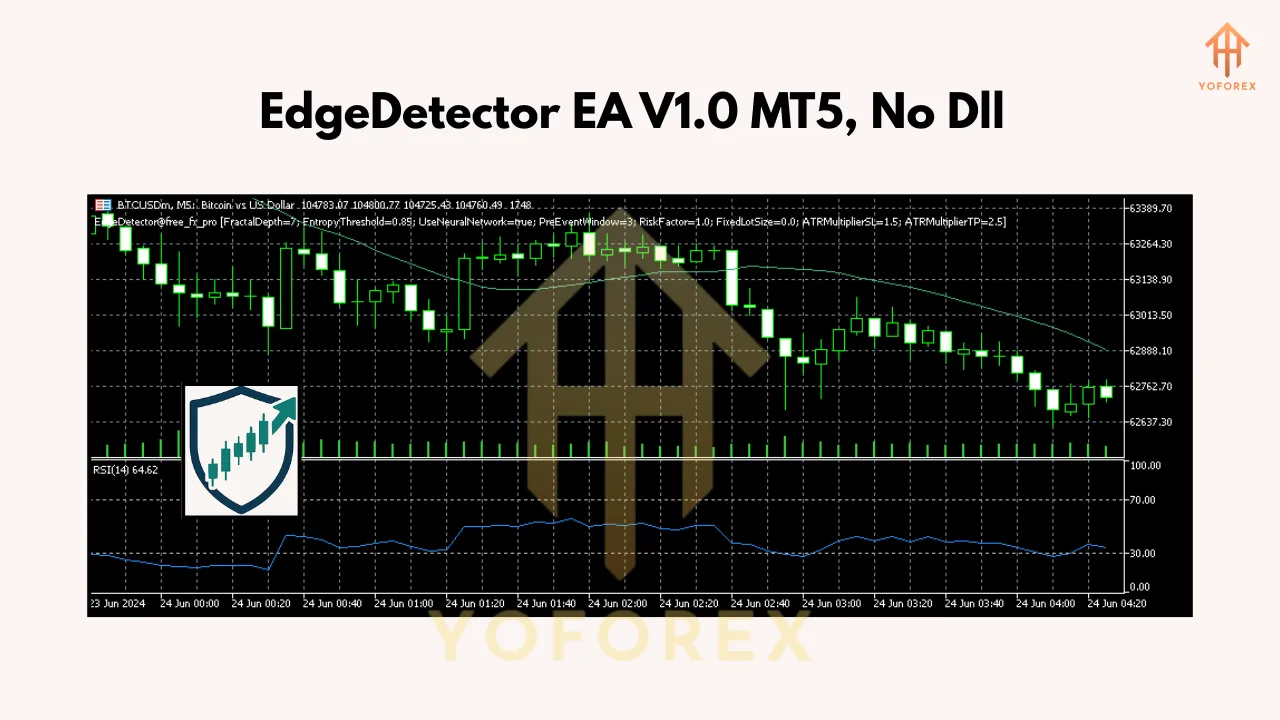
The High-Stakes Arena: A Look at the Traded Instruments and Timeframes
The selection of currency pairs and indices that the EdgeDetector EA is purported to trade is a veritable cocktail of high volatility.
- XAUUSD (Gold): A traditional safe-haven asset, gold is also known for its sharp and often unpredictable price swings, influenced by geopolitical events, inflation data, and US dollar strength.
- Boom and Crash Indices: These are synthetic indices that are designed to simulate two distinct market conditions. The “Boom” indices experience periodic sharp upward spikes in price, while the “Crash” indices are characterized by sudden downward drops. Trading these requires a strategy specifically tailored to their unique behavior.
- Vix 75 (Volatility Index): This index tracks market volatility. High volatility can present significant profit opportunities but also carries a proportionally high risk of rapid and substantial losses.
- BTCUSD (Bitcoin): The cryptocurrency market is notoriously volatile, with Bitcoin often experiencing double-digit percentage price changes within a single day.
Compounding this inherent volatility are the chosen M1 (1-minute) and M5 (5-minute) timeframes. Trading on such low timeframes is the domain of scalpers, who aim to profit from very small price movements. This style of trading requires a robust and lightning-fast execution strategy, as even minor delays or small spreads can turn a profitable trade into a losing one. The combination of highly volatile instruments and extremely short timeframes creates an environment of immense risk.
The Double-Edged Sword of a Low Minimum Deposit
A minimum deposit of $50 makes the EdgeDetector EA accessible to a wide range of traders, particularly those with limited capital. While this low barrier to entry is attractive, it is also a significant red flag. Trading the aforementioned instruments on such short timeframes with a small account is akin to navigating a minefield. The high volatility means that even a small market movement against a position can result in a margin call and the complete loss of the initial deposit.
A $50 account offers very little room for error. A single losing trade, especially if the EA employs a risky strategy like martingale (doubling down on losing trades), can wipe out the entire account in an instant. Responsible trading with an EA, especially on volatile instruments, typically requires a more substantial capital base to withstand drawdowns and allow the trading strategy to play out over a larger number of trades.
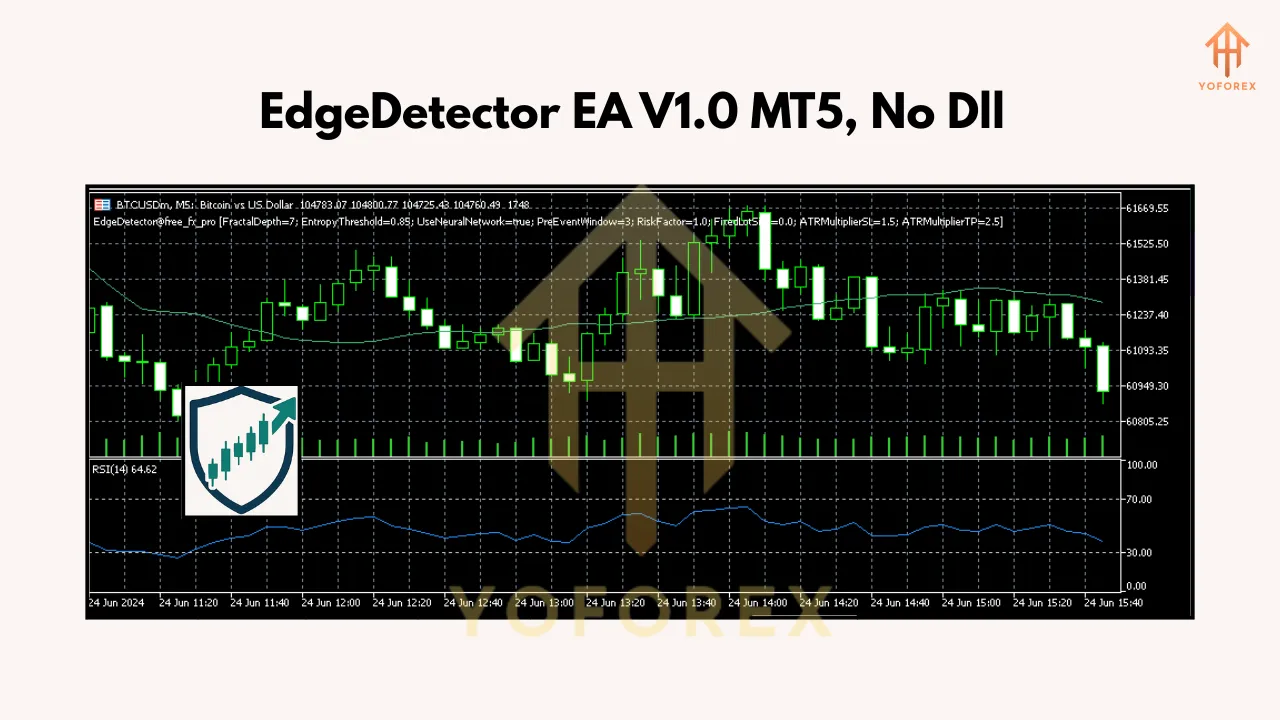
The Quest for Credibility: The Unseen Footprint of EdgeDetector EA V1.0 MT5
A comprehensive search for information regarding the EdgeDetector EA V1.0 MT5 yields a concerning lack of a digital footprint. There are no official websites, no listings on the official MQL5 marketplace, and a scarcity of independent reviews or user feedback on reputable forums. This absence of verifiable information is a major cause for concern.
A reputable EA developer will typically provide:
- Detailed documentation explaining the trading strategy and the logic behind it.
- Verified backtesting results showing the EA’s performance over historical data.
- Live performance tracking on platforms like Myfxbook or FXBlue, which provide transparent and audited results of the EA’s performance on a live trading account.
- An active user community where traders can share their experiences and ask questions.
The lack of these fundamental elements for the EdgeDetector EA V1.0 MT5 makes it impossible to independently verify its legitimacy and effectiveness.
Navigating with Caution: A Guide to Responsible EA Usage
For any trader considering using an EA, especially one with a limited track record like the EdgeDetector EA, a cautious and methodical approach is essential.
1. The Power of the Demo Account: Before risking any real capital, it is imperative to thoroughly test the EA on a demo account for an extended period. This will provide a risk-free environment to observe the EA’s behavior across different market conditions.
2. The Importance of Backtesting: The Strategy Tester in MetaTrader 5 is a powerful tool that allows you to test the EA’s performance on historical data. While past performance is not indicative of future results, it can provide valuable insights into the EA’s potential strengths and weaknesses.
3. Understanding the Parameters: Take the time to understand all the adjustable parameters within the EA’s settings. Do not use default settings without knowing what they control.
4. Start Small: If you do decide to trade with real money, begin with the absolute minimum possible trade size to limit your initial risk.
5. Constant Monitoring: Do not simply “set and forget” an EA. Regularly monitor its performance and be prepared to intervene if it is not performing as expected.
A Final Word of Warning
The world of automated trading is filled with promises of easy profits, but the reality is often far more complex. The EdgeDetector EA V1.0 MT5, with its enticingly low entry barrier and promises of taming highly volatile markets, should be approached with extreme caution. The lack of transparency and verifiable performance data is are significant red flag that cannot be ignored.
Ultimately, the responsibility for managing risk lies with the individual trader. Before entrusting your capital to any automated system, conduct thorough due diligence. In the absence of credible information, the wisest course of action is often to steer clear. The markets will always present opportunities, but preserving your trading capital should always be the foremost priority.