Unlocking Market Secrets: A Deep Dive into the XQ Forex Indicator V4.0 for MT4
In the fast-paced world of forex trading, retail traders are in a perpetual quest for an edge—a tool that can cut through the market noise and provide clear, actionable signals. The promise of a reliable indicator is the promise of simplified decision-making and, hopefully, enhanced profitability. One such tool that has been making rounds in trading circles is the XQ Forex Indicator V4.0 for MetaTrader 4. This article offers an in-depth exploration of this indicator, and while it boasts a low entry barrier with a minimum deposit of just $100, the real questions for any serious trader are: what are the best currency pairs and time frames to use it on?
This comprehensive review will not only delve into the known features of the XQ Forex Indicator V4.0 but will also guide you on how to determine the optimal settings to integrate this tool into your trading strategy effectively.
What is the XQ Forex Indicator V4.0?
The XQ Forex Indicator V4.0 is a custom technical analysis tool designed for the MetaTrader 4 (MT4) platform. From the available information, it is marketed as a non-repaint indicator. This is a crucial feature for traders, as it means the signals generated by the indicator on previous candles do not change after the fact. A non-repainting indicator provides a more stable and trustworthy basis for backtesting and real-time trading decisions.
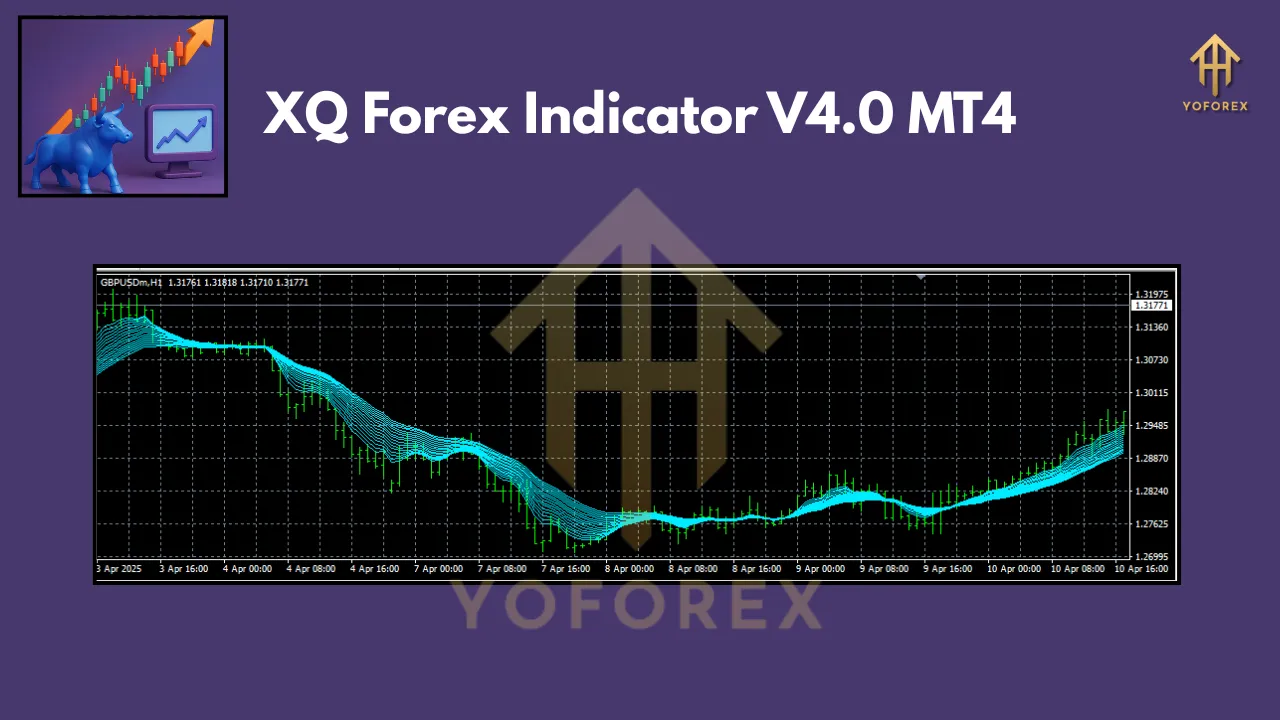
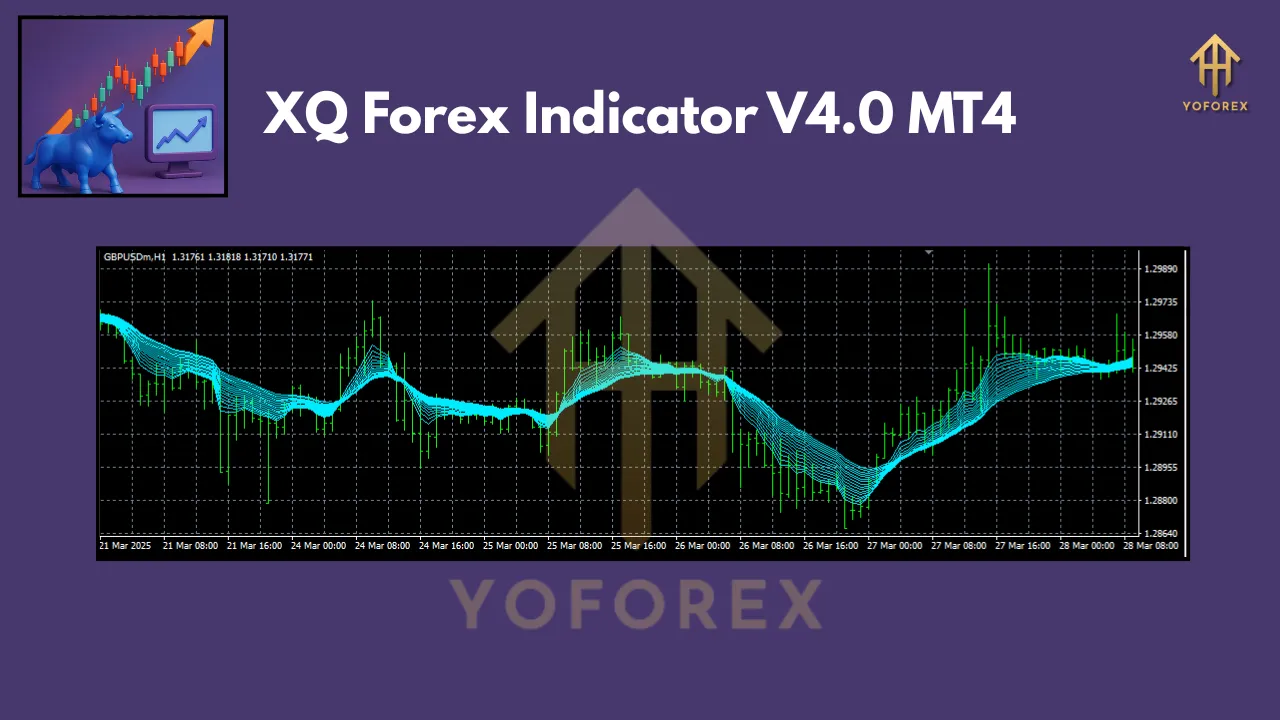
Visually, indicators like the XQ Forex V4.0 typically manifest as arrows, dots, or lines directly on the price chart, signaling potential buy or sell opportunities. The core idea is to simplify the complex process of market analysis by providing straightforward entry prompts. However, the effectiveness of these signals is intrinsically linked to the market conditions, the chosen currency pair’s volatility, and the time frame being analyzed.
Decoding the Strategy: How to Approach the XQ Indicator
Without an official manual detailing the underlying algorithm, traders must engage in some analytical work to understand the indicator’s logic. Generally, such indicators are built upon a combination of classic technical tools like Moving Averages, the Relative Strength Index (RSI), Stochastics, or the Average Directional Index (ADX). The secret sauce lies in how these elements are combined and calibrated.
To understand the XQ Forex Indicator V4.0’s behavior, you should observe how its signals correspond to different market phases:
- Trending Markets: Does the indicator perform best when there is a strong, sustained uptrend or downtrend? If so, it is likely a trend-following system.
- Ranging Markets: How does the indicator behave when the price is consolidating or moving sideways? Many trend-following indicators generate false signals in such conditions. Conversely, if it provides signals at key support and resistance levels within a range, it may have an oscillator-based or reversal component.
The Million-Dollar Question: Optimal Currency Pairs
The choice of currency pairs is a critical decision that can significantly impact the performance of any trading indicator. The ideal pairs for the XQ Forex Indicator V4.0 will depend on its underlying strategy. Here’s a breakdown of how to approach this:
1. Start with the Majors: For any new indicator, it is always wise to begin with the major currency pairs: * EUR/USD: Known for its high liquidity and relatively predictable trends. * GBP/USD: A more volatile pair that can offer significant moves, which is often beneficial for trend-following indicators. * USD/JPY: Often exhibits clear trend phases, but can also enter into prolonged periods of consolidation. * AUD/USD: A commodity-linked currency that can display strong trends influenced by economic data.
These pairs generally have lower spreads, reducing transaction costs, and their high trading volume tends to result in cleaner price action, which can lead to more reliable indicator signals.
2. Test on Volatile Crosses: Once you have a feel for the indicator on the majors, you might consider pairs known for their strong trends and volatility, such as: * GBP/JPY: Famous for its large daily ranges and swift movements. * EUR/JPY: Another volatile pair that can offer excellent trend-trading opportunities.
If the XQ Forex Indicator V4.0 is indeed a trend-following system, these pairs could be where it shines the brightest. However, be mindful that higher volatility also equates to higher risk.
3. The Verdict on Pairs: While there’s no official list, a logical approach would be to focus on major pairs like EUR/USD and GBP/USD initially. Their balanced nature provides a good testing ground. If the indicator proves to be robust in identifying trends, then expanding to more volatile pairs like GBP/JPY could be a profitable next step.
Finding the Sweet Spot: The Best Time Frame
The time frame you trade on is just as important as the currency pair. It dictates the frequency of signals, the potential profit per trade, and the overall trading style.
1. Higher Time Frames for Reliability (H1, H4, D1): * The Case for Patience: Trading on higher time frames like the 1-hour (H1), 4-hour (H4), or even the daily (D1) charts tends to produce more reliable signals. This is because the “noise” of random, short-term price fluctuations is filtered out, leaving a clearer picture of the underlying trend. If the XQ Forex Indicator V4.0 is designed to capture significant market swings, these time frames will likely be its strong suit. * Fewer, but Stronger Signals: You will receive fewer trading signals on these charts, but each one is generally of higher quality. This approach suits swing traders and those who prefer a less hands-on approach.
2. Lower Time Frames for Active Traders (M15, M30): * The Scalper’s Choice? If you are a day trader or scalper, you might be tempted to use the indicator on the 15-minute (M15) or 30-minute (M30) charts. These time frames will offer more frequent trading opportunities. * The Risk of Noise: Be aware that the shorter the time frame, the more likely you are to encounter false signals. A successful strategy on these time frames requires very tight risk management and the ability to make quick decisions. It’s crucial to test the XQ indicator rigorously in a demo environment on these lower time frames before committing real capital.
3. The Verdict on Time Frames: For a balanced approach that offers a good number of signals without being overwhelmed by market noise, the H1 and H4 time frames are likely the most suitable starting points for the XQ Forex Indicator V4.0. This allows for the confirmation of trends while still providing ample trading opportunities within a week. If the indicator proves its worth here, traders can then experiment with lower time frames, perhaps in conjunction with a higher time frame trend filter.
Your Action Plan: How to Master the XQ Forex Indicator V4.0
- Demo Trading is Non-Negotiable: Before you even think about the $100 minimum deposit, install the indicator on a demo account.
- Systematic Testing: Choose one currency pair (e.g., EUR/USD) and apply the indicator to three different time frames (e.g., M30, H1, H4). Let it run for at least a week, taking note of every signal and its outcome.
- Create a Trading Journal: Record the date, time, currency pair, time frame, signal type (buy/sell), and the result of each trade. This data will be invaluable in identifying the indicator’s strengths and weaknesses.
- Combine with Your Own Analysis: Never follow any indicator blindly. Use the XQ Forex Indicator V4.0 as a confirmation tool alongside your own analysis of support and resistance levels, chart patterns, and overall market sentiment.
- Prudent Risk Management: The $100 minimum deposit is attractive, but it also necessitates strict risk management. Never risk more than 1-2% of your account on a single trade.
Conclusion: A Tool, Not a Treasure Map
The XQ Forex Indicator V4.0 for MT4 presents itself as a potentially valuable, non-repainting tool for traders looking to simplify their market analysis. While the absence of a definitive guide from its developers means there is no “one size fits all” answer for the best currency pairs and time frames, a structured and logical approach can unlock its potential.
By starting with major currency pairs like EUR/USD and GBP/USD on H1 or H4 time frames, traders can establish a solid baseline for the indicator’s performance. From there, methodical testing and a keen observation of its behavior in different market conditions will reveal its true character. The XQ Forex Indicator V4.0 is not a magical solution for guaranteed profits, but for the disciplined trader who is willing to put in the analytical work, it could become a powerful and reliable component of a successful trading system. Always remember that the most crucial indicator is your own well-researched and consistently applied trading plan.