
Automated trading has evolved significantly over the past decade, moving far beyond simple indicator-based robots. Modern Expert Advisors are now designed to adapt to market cycles, volatility, and price behavior rather than relying on a single fixed logic. One such system is DCA CycleMax EA V2.53 MT4, a trading robot developed for traders who want to leverage cycle-based price movements using a structured Dollar Cost Averaging approach.
This EA is not designed as a fast scalper or a one-click profit tool. Instead, it focuses on controlled position building, strategic price intervals, and disciplined trade management. In this detailed guide, we will explore how DCA CycleMax EA works, who it is suitable for, its core logic, risk considerations, and best practices for using it responsibly on the MetaTrader 4 platform.
What Is DCA CycleMax EA V2.53 MT4
DCA CycleMax EA V2.53 MT4 is an automated trading system built around the concept of price cycles and averaging strategies. Rather than predicting exact market tops or bottoms, the EA works by entering trades at predefined price gaps and managing positions as part of a structured cycle.
The EA is designed to operate in markets that exhibit strong directional behavior over time, such as gold, indices, and selected cryptocurrency pairs. It uses a grid-style execution combined with Dollar Cost Averaging logic to optimize entry prices and recover positions during pullbacks.
Version 2.53 brings refinements to trade management, particularly around trailing stop logic, improving how positions are closed once price moves back in favor of the active cycle.
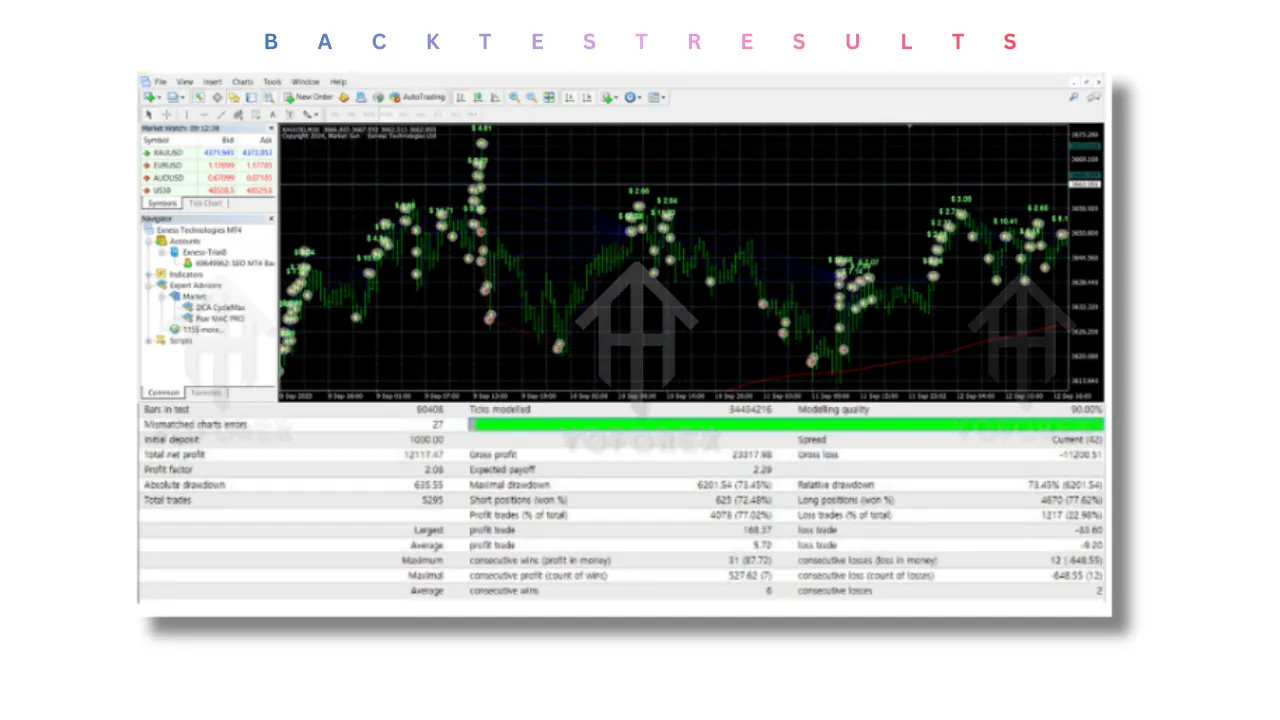
Core Trading Philosophy
The philosophy behind DCA CycleMax EA is based on three principles:
- Markets move in cycles rather than straight lines
- Price retracements are normal, even in strong trends
- Strategic averaging can reduce entry inefficiency when applied with discipline
Instead of placing a single large trade, the EA breaks exposure into multiple entries. These entries are spaced at user-defined intervals, allowing the system to gradually build positions as price moves against the initial trade.
Once the market resumes its dominant direction, the EA aims to close the entire basket at a net profit rather than managing each trade independently.
How the EA Executes Trades
DCA CycleMax EA opens its first position based on predefined logic and market direction settings. If price moves against the initial trade, additional positions are opened at specific price gaps. These gaps are adjustable, allowing traders to control how aggressively or conservatively the system averages.
The EA tracks the overall basket rather than individual trades. Profit targets are calculated at the basket level, ensuring that once price returns to a favorable zone, all open positions can be closed together.
This approach allows the system to recover from temporary drawdowns without relying on tight stop losses that can prematurely close trades during normal market noise.
Cycle-Based Trade Management
One of the defining aspects of DCA CycleMax EA is its cycle-based structure. Trades are not opened randomly or continuously throughout the day. Instead, the EA operates within defined cycles, allowing traders to manage risk exposure more predictably.
Each cycle has limits on the number of entries, maximum lot size, and overall exposure. These safeguards help prevent uncontrolled position growth, which is a common weakness of poorly designed grid systems.
By defining a maximum number of averaging steps, traders can clearly understand the worst-case exposure scenario before deploying the EA on a live account.
Hedging and Recovery Logic
DCA CycleMax EA includes optional hedging features that can be enabled depending on the trader’s risk tolerance. When enabled, the EA can open counter-positions after certain conditions are met, helping stabilize equity during prolonged adverse moves.
This feature is particularly useful in volatile instruments where price can trend strongly in one direction before reversing. Hedging is not mandatory, and traders can choose to operate the EA in a pure directional mode if preferred.
The recovery logic is designed to focus on capital preservation rather than aggressive profit chasing. This makes the EA more suitable for traders who value long-term account stability.
Recommended Trading Conditions
The EA performs best under specific conditions:
- Markets with clear long-term directional bias
- Instruments that experience healthy pullbacks rather than erratic spikes
- Accounts with sufficient free margin to handle multiple entries
Lower timeframes such as M5 are commonly used, as they provide more granular control over entry spacing and basket management. However, the EA’s logic is not dependent on speed, making execution quality and broker stability more important than ultra-low latency.
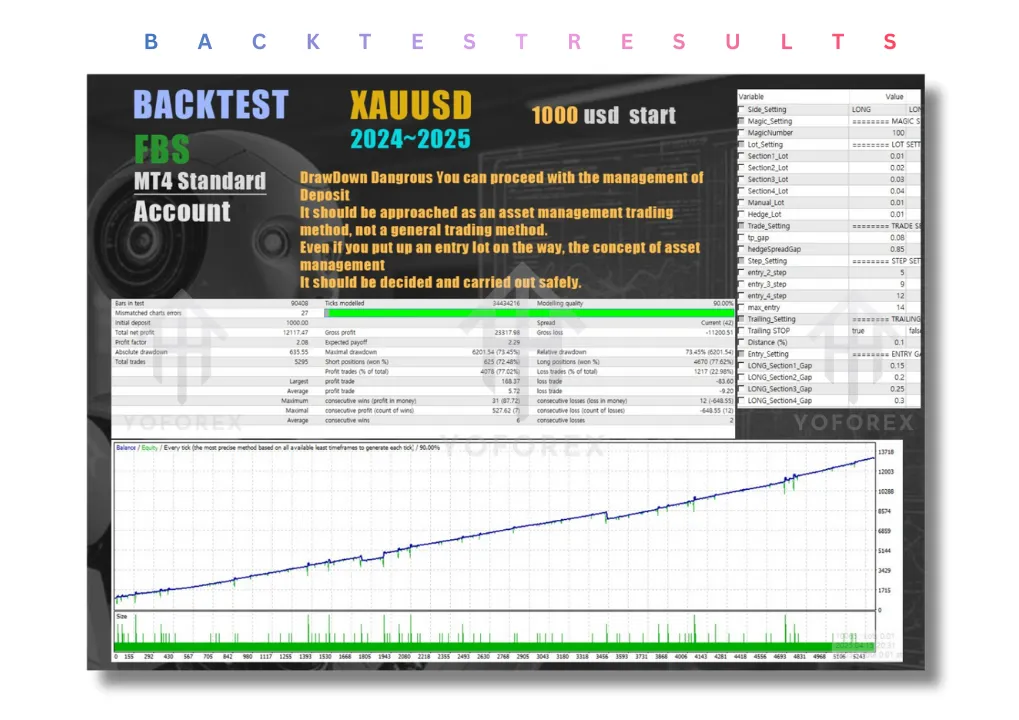
Risk Management Considerations
While DCA CycleMax EA includes several safety mechanisms, it is important to understand that no averaging system is risk-free. Prolonged one-directional markets without meaningful pullbacks can place stress on any grid-based strategy.
To manage risk effectively, traders should:
- Use conservative lot sizes
- Limit the maximum number of averaging steps
- Maintain a healthy margin buffer
- Avoid trading during extreme news volatility
The EA is best suited for traders who understand drawdown dynamics and are comfortable managing floating losses as part of a broader strategy.
Account Type and Broker Selection
The EA is commonly used on accounts with low transaction costs. Swap-free or low-swap accounts are often preferred, as trades may remain open longer than traditional scalping systems.
Execution quality, spread stability, and margin requirements are critical factors when choosing a broker. Since the EA relies on precise entry spacing, inconsistent execution can negatively impact performance.
Who Should Use DCA CycleMax EA
This EA is ideal for:
- Traders experienced with grid and averaging strategies
- Traders who prefer structured, rule-based automation
- Users willing to monitor performance periodically rather than fully unattended trading
It is not recommended for beginners who are unfamiliar with drawdown management or traders looking for guaranteed short-term profits.
Installation and Setup Overview
Installing DCA CycleMax EA on MT4 follows standard procedures. Once installed, traders should carefully review all input parameters before enabling live trading.
Key areas to focus on include entry gap size, maximum trades per cycle, lot scaling method, and trailing stop settings. Running the EA on a demo account before live deployment is strongly recommended.
Long-Term Performance Outlook
When used responsibly, DCA CycleMax EA can be an effective tool for capturing cyclical market movements. Its strength lies in disciplined execution and adaptability rather than aggressive profit targeting.
Traders who align the EA’s settings with their risk tolerance and account size are more likely to achieve consistent results over time.
Final Thoughts
DCA CycleMax EA V2.53 MT4 is a sophisticated trading system designed for traders who understand the mechanics of cycle trading and averaging strategies. It emphasizes structure, recovery logic, and controlled exposure rather than high-frequency execution.
As with any automated system, success depends on realistic expectations, proper configuration, and disciplined risk management. Used correctly, this EA can serve as a valuable component in a diversified trading approach.
Support and Community
For setup assistance, updates, and strategy discussions, you can connect through the official YoForex channels:
WhatsApp: https://wa.me/+443300272265
Telegram Group: https://t.me/yoforexrobot