

Bigmouse Hedging EA V2.1 MT5: A Comprehensive Review
Introduction to Forex Trading and Expert Advisors
Forex trading, the act of buying and selling currencies on the foreign exchange market, is a dynamic and potentially lucrative endeavor. However, it demands constant attention, analytical skills, and emotional discipline. To assist traders, Expert Advisors (EAs) like the Bigmouse Hedging EA V2.1 MT5 have emerged as powerful tools for automating trading strategies. These automated systems execute trades based on predefined algorithms, reducing the emotional bias that often affects human decision-making. In this blog, we’ll explore the Bigmouse Hedging EA V2.1 for MetaTrader 5 (MT5), diving into its features, strategies, performance, and practical considerations for traders in 2025.
The Bigmouse Hedging EA V2.1 is designed to operate on the MT5 platform, a successor to the widely used MetaTrader 4 (MT4). MT5 offers advanced features like improved charting tools, more order types, and compatibility with a broader range of financial instruments. This EA leverages these capabilities to implement a hedging strategy, which is particularly appealing to traders looking to manage risk in volatile markets. Let’s break down what makes this EA stand out, its operational mechanics, and how it fits into the broader landscape of automated forex trading.
What is Bigmouse Hedging EA V2.1?
The Bigmouse Hedging EA V2.1 is an automated trading robot tailored for the MT5 platform. It employs a hedging strategy, which involves opening simultaneous buy and sell positions on the same currency pair to mitigate risk. This approach is particularly effective in choppy or non-directional markets, where price movements are unpredictable. The EA is designed to capitalize on market volatility, aiming to secure profits while minimizing drawdowns through a combination of hedging and risk management techniques.
Unlike some EAs that rely solely on scalping or trend-following strategies, Bigmouse Hedging EA V2.1 integrates martingale elements with hedging to enhance its return on investment (ROI). According to developer claims, this combination can yield high returns, though it comes with inherent risks. The EA is marketed as a stable option compared to other martingale-based systems, with customizable parameters that allow traders to tailor it to their risk tolerance and trading goals.
Key Features
Based on available information and insights from the forex trading community, here are the standout features of Bigmouse Hedging EA V2.1:
-
Hedging Strategy: The EA opens opposing positions (buy and sell) to hedge against adverse price movements, reducing the risk of significant losses in volatile markets.
-
Martingale Integration: It incorporates a martingale approach, increasing lot sizes after losses to recover capital quickly. While this can amplify profits, it also heightens risk.
-
MT5 Compatibility: Built for the MT5 platform, it leverages advanced algorithmic capabilities and supports multiple currency pairs and timeframes.
-
Customizable Parameters: Traders can adjust settings such as lot sizes, take-profit, stop-loss, and trading hours to align with their strategies.
-
Risk Management: Includes features like equity control to protect accounts from excessive drawdowns, though careful monitoring is advised.
-
Timeframe Flexibility: Works best on M5 and H1 timeframes but can be adapted to others, offering versatility for different trading styles.
-
VPS Recommendation: For optimal performance, developers recommend running the EA on a Virtual Private Server (VPS) to ensure 24/5 operation and low latency.
These features position Bigmouse Hedging EA V2.1 as a tool for traders seeking automation with a focus on risk management, though its martingale component requires cautious handling.
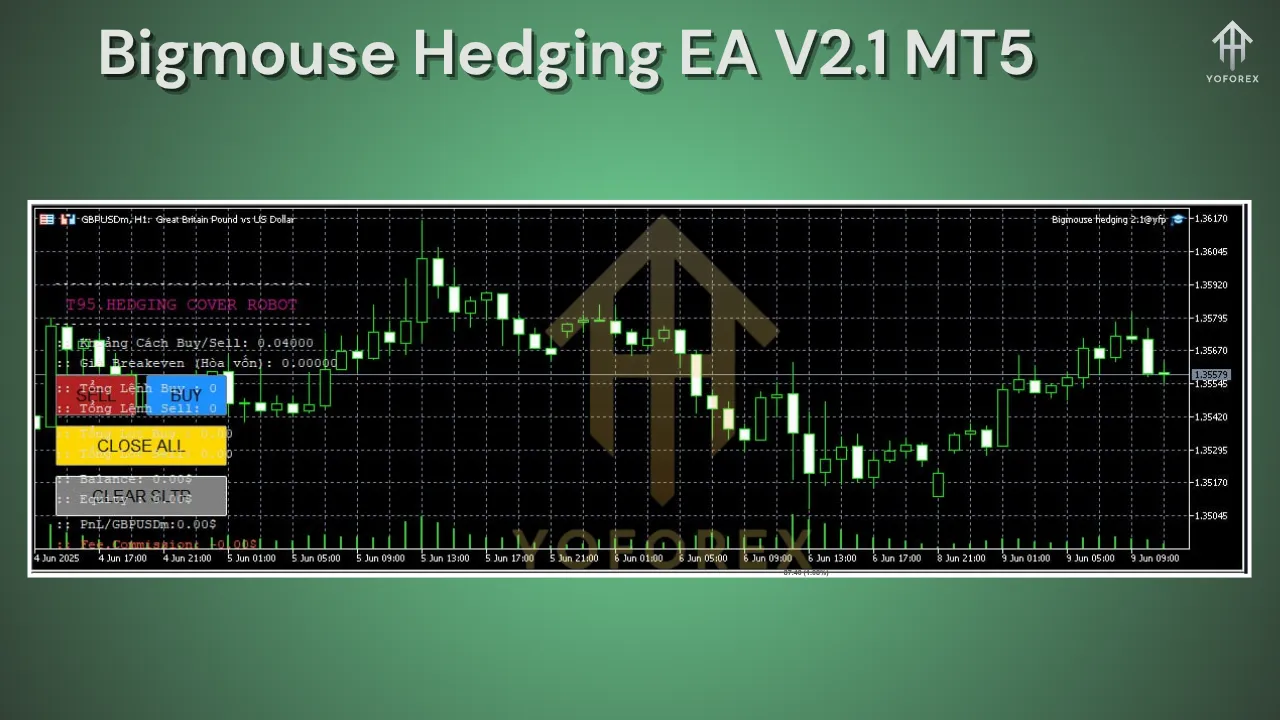
How Does Bigmouse Hedging EA V2.1 Work?
The Bigmouse Hedging EA V2.1 operates by analyzing market conditions and executing trades based on its embedded algorithm. Here’s a step-by-step breakdown of its functionality:
-
Market Analysis: The EA uses technical indicators and price action to identify entry points. While the exact indicators are proprietary, they likely include moving averages or trend filters to determine market direction.
-
Hedging Mechanism: Upon identifying a trading opportunity, the EA opens a buy position and simultaneously places a sell-stop order with a larger lot size. If the buy position hits its take-profit, the sell-stop is canceled. If the price moves against the buy position, the sell-stop activates, creating a hedge.
-
Martingale Scaling: If the initial trade results in a loss, the EA may increase the lot size for subsequent trades to recover losses. This is where the martingale strategy comes into play, aiming to capitalize on market reversals.
-
Profit and Loss Management: The EA sets take-profit and stop-loss levels to manage trades. It aims to ensure that take-profit levels are larger than stop-losses, maintaining a favorable risk-reward ratio.
-
Continuous Operation: Designed to run 24/5, the EA requires a stable internet connection and is best hosted on a VPS to avoid interruptions.
This strategy is particularly suited for volatile markets, as it thrives on price swings. However, the martingale component can lead to significant drawdowns if the market trends strongly in one direction, making risk management critical.
Performance and Reviews
While specific performance data for Bigmouse Hedging EA V2.1 is limited, insights from similar hedging EAs provide context. According to sources like ForexCracked, hedging EAs like Bigmouse are noted for their high ROI potential, with developers claiming “miraculous” returns. However, these claims come with caveats:
-
Profit Potential: The EA’s combination of hedging and martingale strategies can generate substantial profits in choppy markets. Some users report doubling their deposits quickly, though this is not guaranteed.
-
Risk Profile: The martingale approach increases risk, as consecutive losses can escalate lot sizes and strain account balances. Developers recommend withdrawing profits after doubling the deposit to mitigate this risk.
-
Stability: Compared to other martingale-based EAs, Bigmouse is described as relatively stable, with customizable settings that allow traders to fine-tune risk levels.
-
Community Feedback: Limited user reviews suggest mixed experiences. Some traders praise its ease of use and profitability in volatile markets, while others caution against its high-risk nature, particularly in trending markets where hedging can lead to heavy drawdowns.
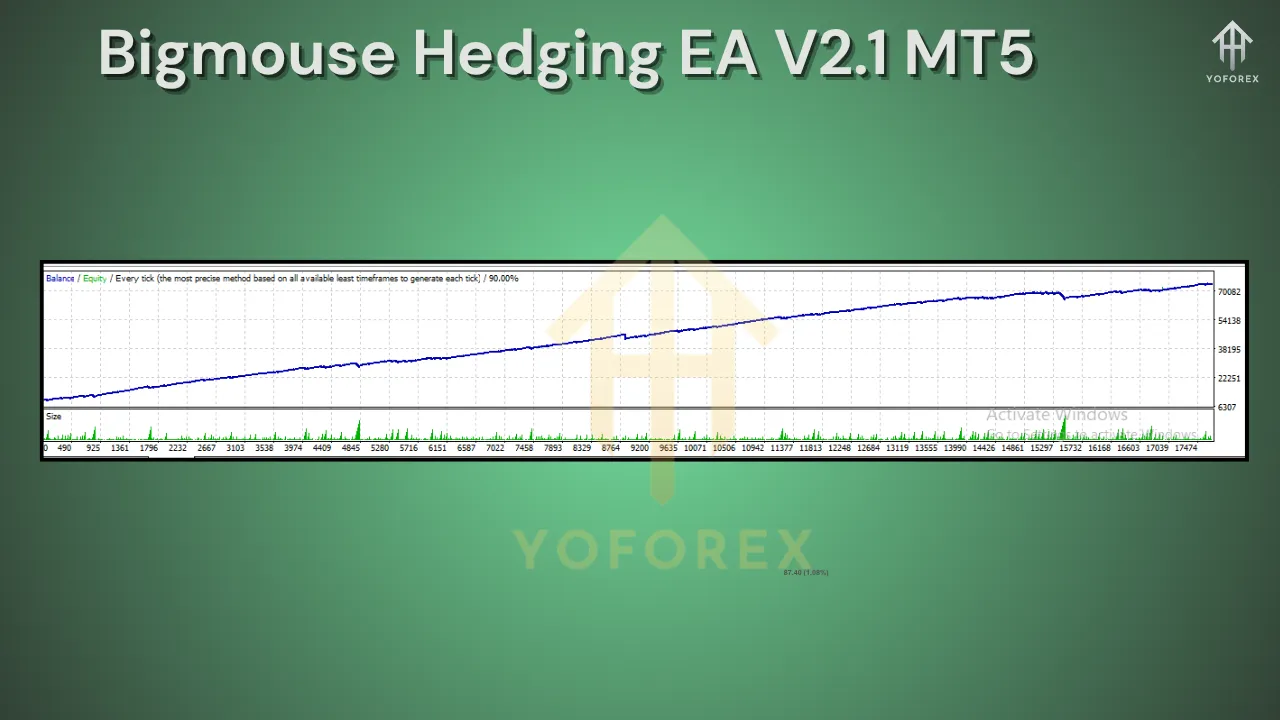
Without verified Myfxbook or FX Blue data specific to Bigmouse Hedging EA V2.1, traders should approach performance claims with skepticism and test the EA extensively on a demo account.
Installation and Setup
Installing Bigmouse Hedging EA V2.1 on MT5 is straightforward:
-
Download the EA: Purchase or download the EA file (typically an .ex5 file) from the provider’s website or a marketplace like MQL5.
-
Open MT5: Launch the MetaTrader 5 platform and navigate to the “Navigator” panel.
-
Install the EA: Drag the EA file onto the chart of your chosen currency pair (e.g., EUR/USD or XAU/USD) and timeframe (M5 or H1 recommended).
-
Configure Settings: A settings window will appear, allowing you to adjust parameters like lot size, take-profit, stop-loss, and trading hours. Follow the developer’s recommendations for optimal settings.
-
Enable Auto-Trading: Ensure the “AutoTrading” button on MT5 is active, and the EA will begin executing trades.
For best results, use a low-spread ECN account and a reliable VPS, as recommended by the developers. Testing on a demo account for at least a week is advised to understand the EA’s behavior.
Advantages and Disadvantages
Advantages
-
Automation: Eliminates emotional bias, allowing for disciplined trading.
-
Hedging Strategy: Reduces risk in volatile, non-directional markets.
-
Customizability: Offers flexible settings to suit various trading styles.
-
MT5 Compatibility: Leverages MT5’s advanced features for robust performance.
-
High ROI Potential: Can generate significant returns in favorable conditions.
Disadvantages
-
Martingale Risks: Increasing lot sizes after losses can lead to substantial drawdowns or account blowouts in trending markets.
-
High Cost: Similar hedging EAs cost $900–$1200, suggesting Bigmouse may be expensive.
-
Limited Transparency: Lack of verified performance data raises concerns about reliability.
-
Market Sensitivity: Performs poorly during strong trends or high-impact news events, requiring manual intervention.
-
VPS Dependency: Requires constant operation, necessitating a VPS for most traders.
Best Practices for Using Bigmouse Hedging EA V2.1
To maximize the EA’s effectiveness and minimize risks, consider these tips:
-
Test on a Demo Account: Run the EA on a demo account for at least one to two weeks to assess its performance in real market conditions.
-
Use a VPS: Ensure uninterrupted operation with a low-latency VPS, such as FXVM, as recommended by developers.
-
Monitor Volatile Markets: Suspend the EA during high-impact news events, as it may struggle in trending conditions.
-
Set Conservative Parameters: Avoid aggressive martingale settings; opt for smaller lot sizes and tighter stop-losses.
-
Withdraw Profits Regularly: Follow the developer’s advice to withdraw funds after doubling your deposit to protect gains.
-
Choose Low-Spread Brokers: Use an ECN or raw spread account to minimize trading costs.
-
Backtest Thoroughly: Use MT5’s strategy tester to evaluate the EA’s performance on historical data for your chosen currency pairs.
Comparison with Other Forex EAs
To contextualize Bigmouse Hedging EA V2.1, let’s compare it to other popular EAs:
-
Forex Fury: Focuses on low-risk scalping, trading one hour daily with verified Myfxbook results. Unlike Bigmouse, it avoids martingale, making it safer but potentially less aggressive.
-
Waka Waka EA: Known for a 61-month profitable track record, it uses algorithmic trading for long-term stability. It’s less risky than Bigmouse but may offer lower short-term gains.
-
Super Hedge Forex Robot: Similar to Bigmouse, it combines hedging and martingale but is noted for high ROI and stability. Both EAs share similar risks and customization options.
Bigmouse stands out for its hedging focus but lags in transparency compared to EAs with verified performance data.
Is Bigmouse Hedging EA V2.1 Right for You?
The Bigmouse Hedging EA V2.1 is best suited for traders with:
-
Moderate to High Risk Tolerance: The martingale strategy can lead to significant drawdowns, requiring a robust account balance.
-
Experience with Automation: Understanding EA settings and market conditions is crucial for optimizing performance.
-
Preference for Hedging: Traders who favor hedging strategies in volatile markets will find it appealing.
-
Access to a VPS: Continuous operation is necessary for consistent results.
Beginners should approach with caution, starting with a demo account and conservative settings. Experienced traders may appreciate the EA’s flexibility but should remain vigilant about its risks.
Conclusion
The Bigmouse Hedging EA V2.1 MT5 offers a compelling option for traders seeking to automate their forex trading with a hedging strategy. Its combination of hedging and martingale techniques can yield high returns in volatile markets, but the inherent risks of martingale scaling demand careful management. While its customizable parameters and MT5 compatibility are strengths, the lack of verified performance data and potential for significant drawdowns are notable drawbacks.
Traders considering this EA should prioritize testing on a demo account, using a low-spread broker, and running it on a VPS. By following best practices and staying mindful of market conditions, users can harness the EA’s potential while mitigating risks. In the ever-evolving world of forex trading in 2025, Bigmouse Hedging EA V2.1 represents a powerful yet high-risk tool for those ready to navigate its complexities.
For more information on forex trading robots or to explore pricing for similar EAs, visit trusted platforms like MQL5 or consult reputable brokers. Always conduct thorough research and backtesting before committing to any automated trading system.