

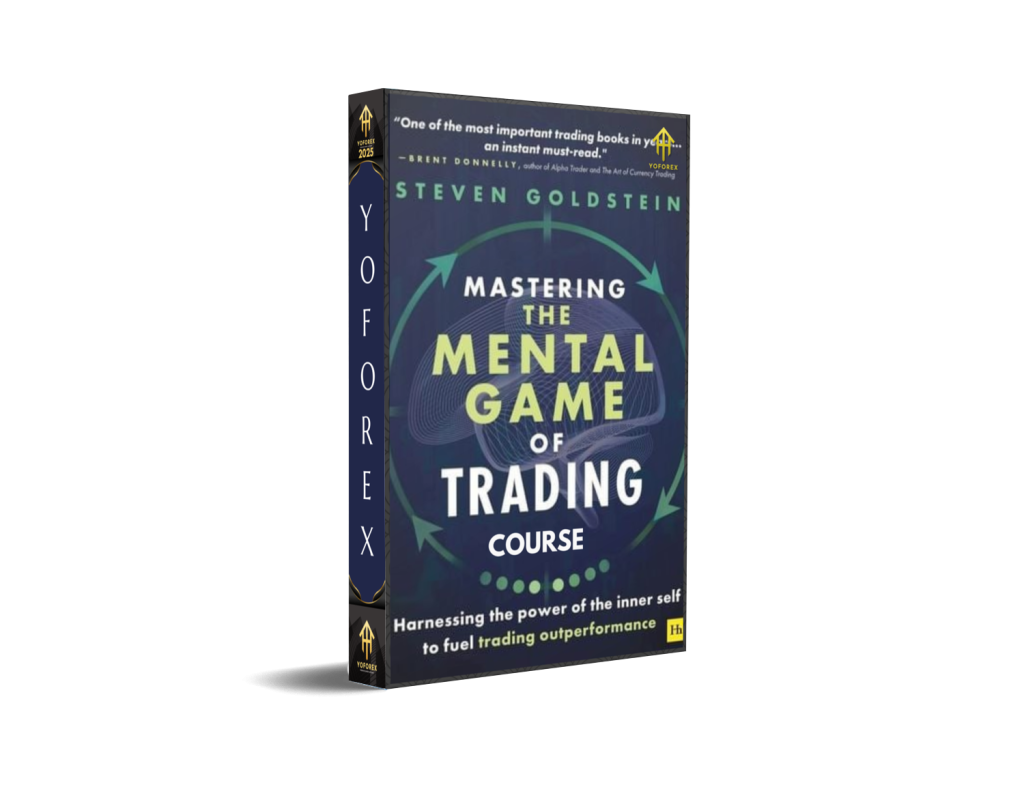
Mastering the Mental Game of Trading – Steven Goldstein Course Review
Trading is often misunderstood as a profession driven by strategies, indicators, algorithms, and charts. But seasoned traders know the real battle is not on the screen—it is within the mind. Steven Goldstein’s Mastering the Mental Game of Trading course positions itself as one of the most powerful psychology-driven programs designed to help traders unlock peak performance. In a world where 90% of traders struggle not because of poor strategies but because of emotional mismanagement, Goldstein’s work serves as a blueprint for achieving high-level consistency.
Steven Goldstein is a globally recognized trading performance coach with decades of experience in the markets and in coaching institutional and retail traders. His course is based on the philosophy that trading success is built on self-awareness, emotional regulation, and behavior optimization, not just technical or fundamental knowledge. Through stories and real examples, he dives deep into how traders think, react, and sabotage themselves—and most importantly, how they can change.
This blog provides a detailed breakdown of the course, key lessons, psychological frameworks, and how traders can apply Goldstein’s principles to transform their trading performance.
Understanding the Core Concept: The Real Enemy in Trading Is Within
Steven Goldstein argues that the biggest obstacle to trading success is not the market but ourselves. Traders often:
-
Overreact to losses
-
Become overconfident after wins
-
Exit too early due to fear
-
Let FOMO push them into low-quality trades
-
Fail to stay consistent because of emotional swings
-
Sabotage themselves through impulsive decisions
Goldstein teaches that these behaviors stem from deep-rooted mental patterns, many of which operate subconsciously. He emphasizes that a trader must first understand their own psychological wiring before trying to master any strategy.
The course dissects how attitudes, beliefs, and emotional triggers shape our decision-making in high-stress environments like the financial markets.
Why Trading Psychology Matters More Than Strategy
A powerful takeaway from the course is that a good strategy is useless without the right mindset. Many traders switch strategies frequently, believing their system is the problem. Goldstein proposes that:
-
It’s not the lack of a good strategy—but the lack of consistent execution.
-
Emotions, not market conditions, cause most performance failures.
-
A trader must learn to align their behavior with their trading plan.
The course illustrates this with real trader stories—showing how talented individuals with profitable strategies failed simply because their mind could not support disciplined action. On the other hand, average strategies executed with strong psychology produced steady gains.
This idea forms the backbone of the course.
Key Lessons from Mastering the Mental Game of Trading
1. Self-Awareness Is the First Step to Improvement
Goldstein insists that traders cannot improve what they do not understand. Through reflective exercises and psychological profiling, he helps traders identify:
-
Emotional triggers
-
Repeating mistakes
-
Risk behavior patterns
-
Mental biases
-
Fear-based reactions
-
Confidence fluctuations
Self-awareness allows traders to see the “mental loops” they have been repeating unconsciously.
2. Behaviour Creates Outcomes
Instead of focusing only on results, traders are taught to focus on behavioral patterns.
Goldstein explains:
-
Trades are simply the result of a series of behavioral choices.
-
If you improve behavior, results automatically improve.
-
Discipline is built from habits, not motivation.
He teaches traders how to build constructive habits that shape long-term consistency.
3. Emotional Flexibility
Markets constantly change, and rigid mindsets break in dynamic environments. Emotional flexibility helps traders:
-
Adapt quickly
-
Accept losses without emotional damage
-
Handle unexpected volatility
-
Adjust risk based on conditions
-
Avoid revenge trading
Goldstein provides psychological tools to help traders stay calm and adaptable even during chaos.
4. Understanding Risk the Right Way
Many traders claim they understand risk, but their actions show otherwise.
He breaks risk into:
-
External risk (market movements)
-
Internal risk (emotional reactions to those movements)
The internal risk is what causes traders to:
-
Move SL further out of fear
-
Close winning trades too early
-
Add to losing positions
-
Trade oversized lots
Goldstein teaches how to manage internal risk by cultivating emotional tolerance and rational decision-making.
5. Building Confidence Through Process, Not Outcome
Traders often feel confident only after a winning streak—but this is unreliable.
Goldstein helps traders build confidence based on:
-
Following their rules
-
Executing trades with discipline
-
Maintaining emotional control
-
Learning from mistakes
This creates stable confidence rather than fragile, outcome-based confidence.
The Transformation Mindset: Becoming the Trader You Want to Be
The Steven Goldstein course does not just teach mental techniques—it focuses on identity transformation.
He introduces the concept of the “Performance Mindset”, which includes:
-
Accountability
-
Self-observation
-
Emotional neutrality
-
Continuous improvement
-
Acceptance of uncertainty
Goldstein emphasizes that traders must grow as individuals to grow as traders.
He teaches how to switch from:
-
reactive → deliberate
-
fearful → confident
-
impulsive → disciplined
-
uncertain → self-assured
-
victim mentality → ownership mentality
The course provides practical tools to help traders evolve psychologically.
Real Trader Stories: Learning Through Experience
One of the best parts of Goldstein’s teaching style is his use of stories from real traders.
He showcases:
-
Traders who blew accounts despite strong strategies
-
Traders who tripled their performance by fixing emotional habits
-
Traders stuck in fear cycles who transformed through mindset work
-
Institutional traders with millions on the line who struggled emotionally
These stories make the lessons relatable. Traders feel seen, understood, and empowered.
Tools & Techniques You Learn in the Course
The course equips traders with a wide range of methods that improve emotional and behavioral performance:
-
Mindfulness-based trading preparation
-
Breathing and emotional reset techniques
-
Cognitive reframing
-
Behavioral pattern tracking
-
Journal analysis for self-improvement
-
Identifying destructive habits
-
Pre-trade and post-trade ritual building
-
Practical exercises for emotional resilience
These tools help traders manage stress, avoid impulsive actions, and stay consistent.
Who Should Take This Course?
This course is ideal for:
-
Traders who keep repeating the same mistakes
-
Traders who are profitable sometimes but inconsistent
-
Traders who get emotional easily
-
Traders who panic, overtrade, or get FOMO
-
Traders who want a serious psychological upgrade
-
Anyone pursuing long-term trading success
Whether beginner or experienced, the psychological insights apply to all.
Benefits of Mastering the Mental Game
By the end of the course, most traders experience:
-
Better discipline
-
Higher emotional control
-
More consistent decision-making
-
Clearer trading routines
-
Improved confidence
-
Fewer impulsive trades
-
Reduced revenge trading
-
Stronger long-term mindset
It shifts traders from being strategy-driven to performance-driven, which is the foundation of building a lasting trading career.
Final Thoughts: Why This Course Matters
Steven Goldstein’s Mastering the Mental Game of Trading is not just another psychological course—it is a transformative guide designed to reshape how traders think, feel, and behave in the markets. It uncovers the truth that the market rewards psychological strength more than analytical skill.
If strategy is the vehicle, then psychology is the engine—and Goldstein helps traders tune that engine to peak performance. His course is a must for anyone who wants to elevate their trading from inconsistent to powerful, from emotional to controlled, and from reactive to professional.