

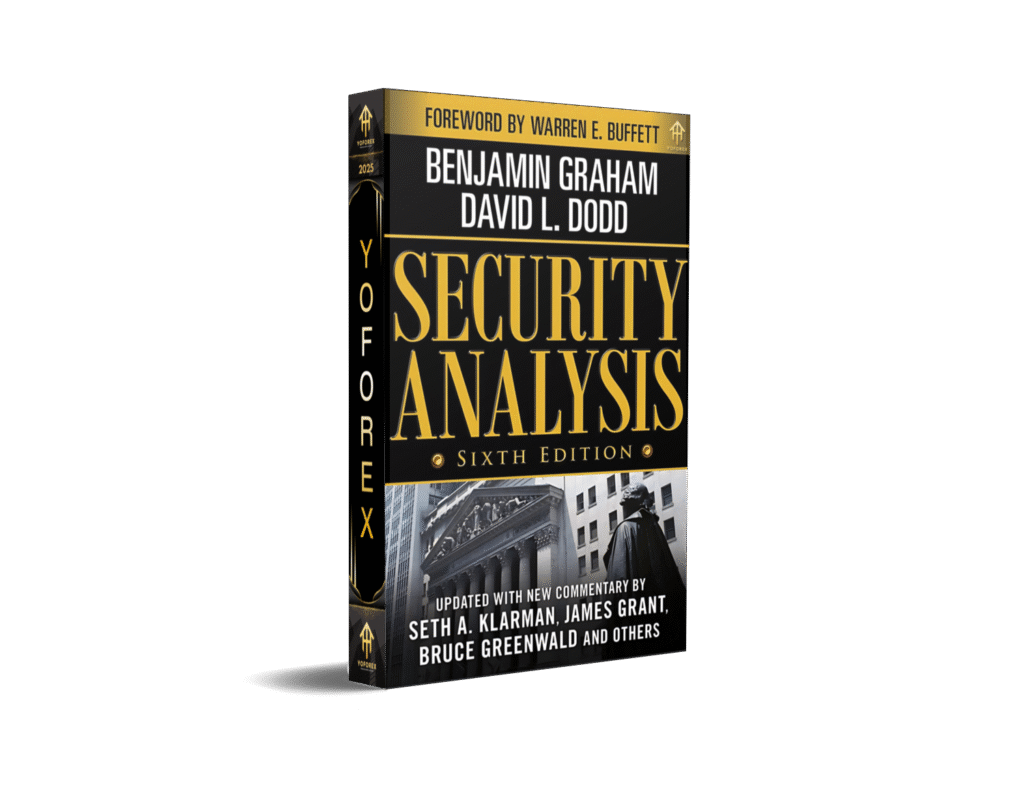
Mastering Value Investing: A Deep Dive into the Security Analysis Trading Course Sixth Edition
Introduction to Security Analysis and Value Investing
In the world of finance, few books have left as indelible a mark as Security Analysis by Benjamin Graham and David Dodd. First published in 1934, this seminal work introduced the concept of value investing, a disciplined approach to identifying undervalued securities based on their intrinsic worth. The sixth edition, released in 2008 with a foreword by Warren Buffett, builds on the classic 1940 version by adding contemporary commentary from leading investors, making it a vital resource for modern traders and investors. The Security Analysis Trading Course Sixth Edition—a structured educational program based on this book—distills its timeless principles into a practical framework for aspiring and seasoned investors alike. In this 1500-word blog, we explore the course’s structure, key lessons, relevance in today’s markets, and its value for traders seeking to master value investing.
Overview of the Security Analysis Trading Course Sixth Edition
The Security Analysis Trading Course Sixth Edition is an educational program designed to teach the principles of value investing as outlined in the sixth edition of Security Analysis. While the book itself is a dense, 700+ page tome, the course translates its complex theories into actionable strategies for analyzing stocks, bonds, and other securities. Offered through various platforms (e.g., financial education providers or universities like Columbia Business School, where Graham and Dodd taught), the course typically includes lectures, case studies, and practical exercises. It leverages the book’s core text alongside 200 pages of new commentary from prominent investors like Seth Klarman, James Grant, and Howard Marks, who contextualize Graham and Dodd’s teachings for today’s dynamic markets.
The course is aimed at:
-
Novice Investors: Those new to value investing who seek a structured introduction to financial analysis.
-
Experienced Traders: Professionals looking to refine their strategies using Graham’s margin-of-safety principle.
-
Financial Analysts: Individuals pursuing certifications like the CFA, where Security Analysis is a foundational text.
Core Components of the Course
1. Foundational Principles of Value Investing
The course begins with an exploration of value investing, a philosophy that emphasizes buying securities at prices below their intrinsic value. Graham and Dodd’s approach focuses on rigorous financial analysis to assess a company’s fundamentals, such as earnings, assets, and liabilities. Key concepts include:
-
Intrinsic Value: The true worth of a company based on its financial health, not market price.
-
Margin of Safety: Purchasing securities at a significant discount to their intrinsic value to minimize risk.
-
Fundamental Analysis: Evaluating financial statements to identify undervalued opportunities.
Participants learn to distinguish between investment and speculation, a cornerstone of Graham’s philosophy, ensuring decisions are grounded in data rather than market hype.
2. Financial Statement Analysis
A significant portion of the course is dedicated to dissecting financial statements—balance sheets, income statements, and cash flow statements. Students are taught to:
-
Calculate key ratios (e.g., price-to-earnings, debt-to-equity).
-
Assess a company’s liquidity, solvency, and operational efficiency.
-
Identify red flags, such as inconsistent earnings or excessive leverage.
Case studies, often drawn from real-world examples in the book, illustrate how to apply these metrics to industries like railroads (in the 1940 context) or modern tech firms.
3. Valuation Techniques
The course covers Graham’s valuation methods, including the famous formula introduced in The Intelligent Investor and refined in later editions of Security Analysis: [ V = \text{EPS} \times (8.5 + 2g) ] where ( V ) is intrinsic value, ( \text{EPS} ) is trailing twelve months’ earnings per share, and ( g ) is the expected growth rate over 7–10 years. While Graham later questioned its precision in the 1970s due to increased market complexity, the course adapts this heuristic for modern contexts, incorporating interest rate adjustments and qualitative factors.
4. Commentary from Modern Experts
The sixth edition’s 200 pages of commentary are a highlight of the course, bridging the gap between 1940s markets and today’s environment. Contributors like Seth Klarman (author of Margin of Safety) and Roger Lowenstein (author of Buffett: The Making of an American Capitalist) explain how to apply value investing in an era of high-frequency trading, ETFs, and globalized markets. The course integrates these insights through:
-
Guest lectures or recorded sessions by industry leaders.
-
Discussions on adapting Graham’s principles to sectors like technology, where intangible assets dominate.
5. Practical Application and Case Studies
The course emphasizes hands-on learning through:
-
Stock Analysis Projects: Students select a publicly traded company, analyze its financials, and estimate its intrinsic value.
-
Portfolio Simulations: Participants build mock portfolios using value investing principles, testing strategies in simulated market conditions.
-
Historical Case Studies: Examples from the 1940 edition (e.g., railroad bonds) are juxtaposed with modern cases to highlight timeless principles.
These exercises ensure learners can translate theory into practice, a critical skill for navigating volatile markets.
Relevance in Today’s Markets
When Security Analysis was first published, markets were dominated by industrial firms and fixed-income securities, and the Great Depression shaped investment strategies. Today’s markets, characterized by tech giants, cryptocurrencies, and algorithmic trading, may seem worlds apart. Yet, the sixth edition’s commentary argues that Graham and Dodd’s principles remain relevant. The course addresses this by:
-
Adapting to Intangible Assets: Modern firms like Apple or Amazon rely on intangible assets (e.g., brand value, intellectual property). The course teaches how to assess these alongside traditional metrics.
-
Navigating Volatility: The margin-of-safety principle protects against market downturns, as seen in the 2008 financial crisis or the 2020 COVID-19 crash.
-
Countering Speculation: The course warns against speculative bubbles (e.g., the 1929 crash or the 1990s tech bubble), drawing parallels to recent phenomena like meme stocks.
Warren Buffett’s foreword underscores the book’s enduring value, noting that he has followed its roadmap for 57 years with remarkable success.
Benefits of the Course
1. Timeless Investment Framework
The course provides a disciplined framework that prioritizes long-term wealth creation over short-term gains. This is particularly valuable in an era of rampant misinformation and speculative trading trends.
2. Enhanced Analytical Skills
Participants develop a deep understanding of financial analysis, enabling them to evaluate securities with confidence. This skill is invaluable for careers in finance, asset management, or personal investing.
3. Expert Insights
The inclusion of commentary from modern value investors offers a bridge between historical wisdom and contemporary challenges, making the course relevant for today’s markets.
4. Practical Experience
Through simulations and case studies, learners gain hands-on experience, reducing the learning curve when applying strategies in real-world trading.
Limitations and Considerations
1. Dense and Outdated Content
Some critics argue that parts of Security Analysis—particularly its focus on railroads and utilities—are less relevant today, as fixed assets are less critical in modern industries. The course mitigates this by emphasizing commentary but may still feel heavy for beginners.
2. Time Commitment
The course, like the book, requires significant time to master. With a 700+ page text and complex case studies, it’s not a quick fix for traders seeking instant results.
3. Not a Trading Course in the Traditional Sense
While titled a “trading course,” it focuses on long-term investing rather than day trading or technical analysis. Those seeking short-term strategies may find it misaligned with their goals.
4. Cost
The course’s cost varies by provider (e.g., Columbia University or online platforms like Coursera). Combined with the book’s price (around $30–$80), it may be a barrier for some.
Comparison with Other Trading Courses
Compared to courses like The Trading Book Course by Anne-Marie Baiynd, which focuses on technical analysis and short-term trading, the Security Analysis Trading Course is grounded in fundamental analysis and long-term investing. While technical courses emphasize chart patterns and momentum, this course prioritizes intrinsic value and risk management, making it ideal for value investors but less suited for day traders.
Practical Tips for Enrollees
-
Start with The Intelligent Investor: Graham’s more accessible book provides a foundation for Security Analysis’s denser content.
-
Use a Demo Account: Apply course principles in a simulated trading environment to test strategies without financial risk.
-
Engage with Commentary: Focus on the sixth edition’s modern commentary to understand contemporary applications.
-
Join a Community: Platforms like Reddit or MQL5 offer forums to discuss value investing and share insights.
-
Supplement with CFA Resources: The course aligns with CFA Level I topics, making it a stepping stone for professional certification.
Community Feedback
Reviews of Security Analysis on platforms like Goodreads praise its intellectual rigor but note its complexity. One reviewer called the sixth edition “a great read for investors” but suggested starting with The Intelligent Investor for clarity. Others highlight the book’s relevance despite outdated examples, with a 4.8-star rating on BooksRun. Course-specific feedback is sparse, but students of similar Columbia Business School programs commend the practical case studies and expert insights.
Conclusion
The Security Analysis Trading Course Sixth Edition is a comprehensive program that brings Benjamin Graham and David Dodd’s timeless value investing principles to life. By blending the classic 1940 text with modern commentary, it equips traders with the tools to navigate today’s complex markets. While its focus on fundamental analysis and long-term investing may not suit day traders, it offers unparalleled depth for those committed to mastering value investing. Through financial statement analysis, valuation techniques, and practical exercises, the course empowers participants to make informed, disciplined investment decisions. For aspiring investors, financial analysts, or anyone seeking a robust foundation in security analysis, this course is a worthy investment in knowledge and skill. As Warren Buffett attests, it’s a roadmap that has guided generations to financial success—and it remains as relevant as ever in 2025.