

Trending Mechanisms EA V1.0 MT4: A Comprehensive Guide to Automated Trend Trading
In the dynamic world of Forex trading, identifying and capitalizing on market trends is crucial for successful investment outcomes. Trending Mechanisms Expert Advisor (EA) for MetaTrader 4 (MT4) represents a sophisticated solution designed to automate and optimize trend-based trading strategies. This comprehensive guide explores the concept of trending mechanisms in Expert Advisors, their implementation in MetaTrader 4, and provides insights into selecting and utilizing these powerful tools effectively.
Understanding Trending Mechanisms in Trading
Trending mechanisms form the foundation of many successful trading strategies, particularly in the realm of automated trading systems. At its core, a trending mechanism refers to a set of rules, indicators, or algorithms designed to identify and capitalize on market trends. In the context of financial markets, a trend represents the general direction in which prices are moving over a specific period.
The Importance of Trend Identification in Trading
The ability to accurately identify market trends is fundamental to making informed trading decisions. When prices are trending in a particular direction, they exhibit greater predictability and stability compared to range-bound markets. This predictability allows traders to enter positions with higher confidence in their direction, potentially leading to more profitable trades.
In the world of Forex trading, where currency pairs fluctuate constantly, identifying trends can be both an art and a science. Traders who can reliably detect trends gain a significant advantage over those who cannot. The challenge, however, lies in distinguishing genuine trends from mere market noise or temporary price movements.
Types of Market Trends
Market trends can generally be categorized into three main types:
- Uptrend: Characterized by a series of higher highs and higher lows. This indicates that the market is moving upwards, with buyers dominating the market dynamics.
- Downtrend: Defined by a sequence of lower highs and lower lows. In this scenario, sellers are in control, driving prices downward.
- Sideways Trend (Range): Occurs when prices fluctuate within a relatively stable range, without showing a clear upward or downward direction. This type of market is often referred to as a “range-bound” market.
Understanding these different types of trends is crucial for any trader, as different trading strategies perform better in different market conditions. For instance, trend-following strategies are most effective in trending markets, while range-trading strategies are better suited for sideways markets.
Common Indicators Used in Trend Identification
Traders employ various technical indicators to identify and confirm market trends. Some of the most widely used indicators include:
- Moving Averages: These smooth out price data by creating a constantly updated average price. Different moving average periods can help identify trends of varying lengths. For example, a 200-period moving average is often used to identify long-term trends, while shorter periods like 20 or 50 might indicate intermediate-term trends.
- Moving Average Convergence Divergence (MACD): This indicator shows the relationship between two moving averages of a security’s price. The MACD line (difference between the two moving averages) and the signal line (moving average of the MACD line) can help identify trend strength and potential reversals.
- Relative Strength Index (RSI): While primarily used to identify overbought or oversold conditions, RSI can also provide insights into trend strength. A rising RSI in a trending market can confirm the trend’s validity, while a divergence between price and RSI might signal a potential trend reversal.
- Bollinger Bands: Comprising a moving average and two standard deviation lines, Bolling Bands help identify volatility and potential trend reversals. Prices touching or crossing the upper or lower bands can indicate overbought or oversold conditions, respectively.
These indicators, either used individually or in combination, form the basis of many trending mechanisms in trading. They allow traders to quantify market movements and make more objective trading decisions based on predefined rules rather than emotional impulses.
An Overview
MetaTrader 4 (MT4) stands as one of the most popular and widely used trading platforms in the Forex industry. Developed by MetaQuotes Software Corp., MT4 offers a comprehensive suite of tools for trading, charting, and market analysis. One of its most powerful features is the ability to automate trading strategies through Expert Advisors (EAs).
What is an Expert Advisor (EA)?
An Expert Advisor is an automated trading system that can analyze market data, identify trading opportunities, and execute trades based on predefined rules and strategies. Essentially, an EA is a computer program that runs on the MT4 platform and can perform trading actions without direct human intervention.
EAs are created using the MetaQuotes Language 4 (MQL4), a programming language specifically designed for developing trading robots and indicators for MT4. These programs can access real-time market data, perform complex calculations, and make trading decisions based on programmed logic.
How Expert Advisors Work in MT4
At a fundamental level, an Expert Advisor works by processing market data through a set of predefined rules or algorithms. These rules determine when to enter trades, when to exit trades, and how to manage risk.
The core functions of an EA include:
- Market Analysis: EAs can analyze various market conditions, such as price movements, volume, and technical indicators.
- Trade Execution: Based on the analysis, EAs can automatically place buy or sell orders, set stop-loss and take-profit levels, and manage open positions.
- Risk Management: Many EAs incorporate sophisticated risk management strategies, including position sizing based on account size and risk tolerance.
- Monitoring and Adjustment: Some EAs continuously monitor market conditions and can adjust their strategies in response to changing market dynamics.
The versatility of EAs allows them to implement a wide range of trading strategies, from simple moving average crossover systems to complex algorithms involving multiple indicators and conditions.
Benefits of Using Expert Advisors
The use of Expert Advisors offers several advantages to traders:
- 24/7 Trading: EAs can operate continuously, even when the trader is not actively monitoring the market. This capability is particularly valuable in the Forex market, which operates 24 hours a day.
- Emotional Discipline: By automating trading decisions, EAs eliminate emotional biases that can lead to impulsive trading and poor decision-making.
- Consistency: EAs execute trades based on strict rules, ensuring consistency in trading strategies and reducing the risk of human error.
- Efficiency: EAs can process large amounts of data and make decisions much faster than human traders, allowing for more timely execution of trades.
These benefits make EAs particularly appealing to traders who want to automate their trading strategies and free themselves from the need to constantly monitor the market.
Challenges and Considerations
While Expert Advisors offer numerous advantages, they also present certain challenges:
- Configuration Complexity: Setting up and configuring an EA requires a good understanding of trading strategies and the MT4 platform. Misconfiguration can lead to suboptimal performance or even losses.
- Overfitting: EAs are often tested on historical data to optimize their parameters. However, an EA that performs well on historical data may not necessarily perform well in real-time trading conditions, a phenomenon known as “overfitting.”
- Risk Management: Effective risk management is crucial when using EAs. Without proper risk controls, automated trading can quickly lead to significant losses, especially in volatile markets.
- Continuous Monitoring: Even automated systems require regular monitoring and occasional adjustments to adapt to changing market conditions.
Despite these challenges, when properly configured and managed, Expert Advisors can significantly enhance trading performance and provide a more disciplined approach to market participation.
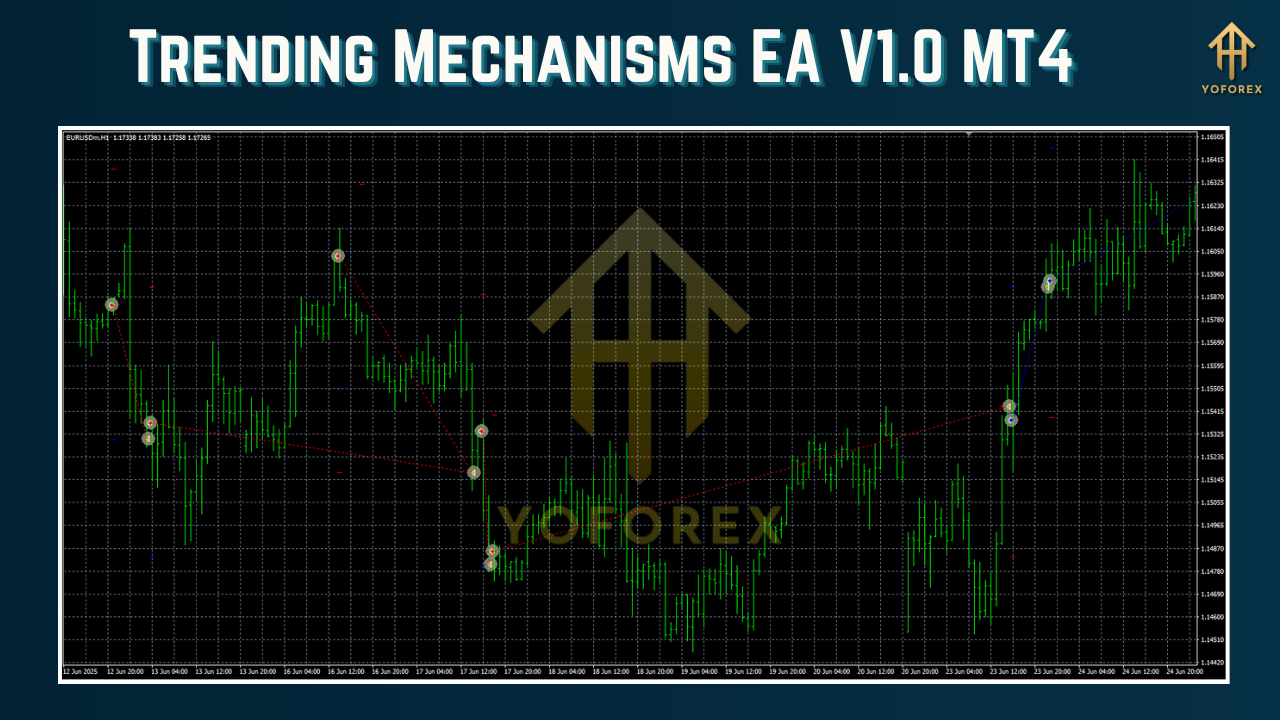
Trending Mechanisms Implemented in Expert Advisors for MT4
The integration of trending mechanisms into Expert Advisors represents a sophisticated approach to automating trend-based trading strategies. By incorporating algorithms designed to detect and exploit market trends, these EAs aim to capture the predictability and stability that trending markets offer.
Core Principles of Trending Mechanisms in EAs
At their core, trending mechanisms in EAs rely on the following principles:
- Trend Detection: Identifying the presence and direction of a market trend. This often involves analyzing price movements relative to moving averages or other trend indicators.
- Entry and Exit Rules: Defining specific conditions under which to enter and exit trades. These conditions are typically based on the identified trend and may include additional filters to confirm the trade setup.
- Risk Management: Implementing robust risk management strategies to protect capital and maximize potential returns. This includes setting appropriate position sizes and risk-reward ratios.
- Adaptability: Many advanced EAs incorporate mechanisms to adapt to changing market conditions, ensuring that the trading strategy remains effective even as market dynamics evolve.
These principles form the foundation of most trending mechanisms used in Expert Advisors, providing a structured approach to trend-based trading.
Common Trending Strategies Employed by EAs
Several trending strategies are commonly implemented in Expert Advisors:
- Trend Following: This strategy involves entering trades in the direction of the identified trend and holding them until the trend shows signs of reversal or exhaustion. Trend following EAs often use moving averages, MACD, or other momentum indicators to identify trend direction.
- Trend Reversal: Unlike trend following, trend reversal strategies aim to identify potential points of trend change and position trades accordingly. These EAs might look for divergence between price and indicators, or specific candlestick patterns that signal a potential trend reversal.
- Hedging Mechanisms: Some EAs employ hedging strategies, where they take offsetting positions to protect against potential losses. For example, if the price moves significantly away from an open trade, the EA might initiate a counter position to hedge against further adverse movement.
- Scalping: Scalping EAs focus on capturing small price movements in trending markets. They typically enter and exit trades quickly, aiming to profit from short-term price fluctuations within a larger trend.
These strategies, either used individually or in combination, allow Expert Advisors to adapt to different market conditions and maximize potential returns.
Example Implementation: ATR and SuperTrend Integration
One concrete example of trending mechanisms in EAs is the integration of Average True Range (ATR) and SuperTrend indicators. The ATR measures market volatility, helping to identify periods of high volatility that might indicate strong trends. The SuperTrend indicator, on the other hand, combines elements of moving averages and ATR to provide a dynamic trend-following signal.
In an Expert Advisor, these indicators might be used in the following way:
- Trend Direction Identification: The SuperTrend indicator would be used to determine the overall direction of the market trend. When the price is above the SuperTrend line, it indicates an uptrend; when below, a downtrend.
- Volatility Assessment: The ATR would be used to assess market volatility. Higher ATR values might trigger larger position sizes, assuming greater potential movement, while lower values might lead to smaller positions.
- Risk Management: The ATR could also be used to set stop-loss levels, placing them at a distance proportional to the ATR value. This ensures that stop-loss levels are adjusted based on current market volatility.
This integration of ATR and SuperTrend provides a comprehensive trending mechanism that not only identifies the direction of the trend but also adjusts trade parameters based on market conditions, offering a more dynamic and adaptive trading approach.
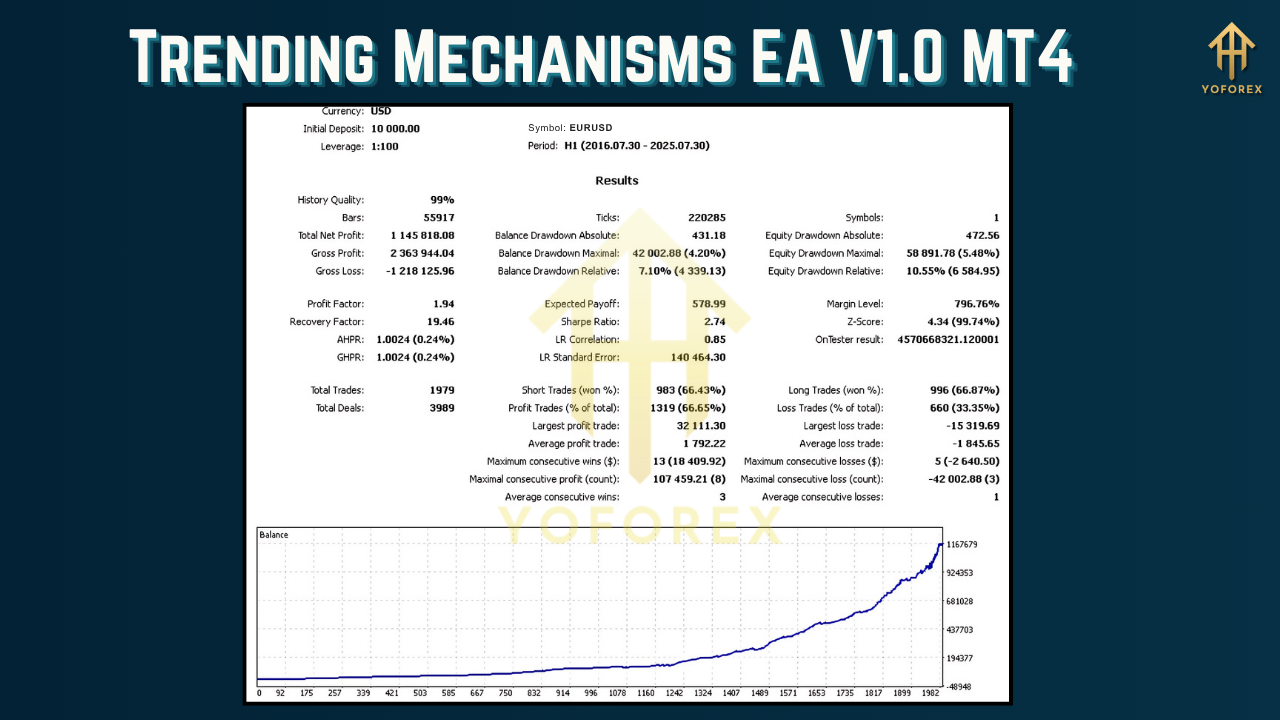
Popular Expert Advisors with Trending Mechanisms for MT4
The MetaTrader 4 platform hosts a wide variety of Expert Advisors designed to implement different trading strategies, including those based on trending mechanisms. Some of the most notable EAs in this category include:
FXGenix: Advanced Trend Retracement Identification
FXGenix stands as a state-of-the-art Expert Advisor designed to optimize Forex trading strategies by identifying trend retracements with exceptional precision. Developed by Avenix Fzco, a financial technology company based in Dubai, FXGenix combines advanced indicators and candlestick patterns to make informed trading decisions.
Key features of FXGenix include:
- Trend Retracement Detection: The EA is specifically designed to identify retracements within established trends, allowing traders to enter trades at potentially favorable points.
- Advanced Indicators: It employs a sophisticated combination of technical indicators to analyze market conditions and identify trading opportunities.
- Candlestick Pattern Recognition: FXGenix recognizes various candlestick patterns, which are often considered indicators of potential price reversals or continuations.
- Risk Management: The EA includes built-in risk management features, ensuring that trades are executed with appropriate position sizing and stop-loss levels.
FXGenix represents a cutting-edge approach to trend trading, leveraging both traditional technical analysis tools and advanced algorithms to enhance trading performance.
Trending Mechanism EA: Advanced Algorithmic Trading
Another notable Expert Advisor is the Trending Mechanism EA available on mql5.com. This EA uses advanced algorithms to detect trends in currency pairs and trade based on the strongest signals derived from these trends.
Key aspects of this EA include:
- Advanced Algorithmic Detection: The EA employs sophisticated algorithms to identify and quantify market trends, ensuring that trades are executed in the direction of the strongest signals.
- ATR and SuperTrend Integration: It utilizes Average True Range (ATR) and SuperTrend indicators for trend detection and risk management. The ATR helps measure market volatility, while the SuperTrend provides a dynamic trend-following signal.
- User-Friendly Interface: The EA features a straightforward interface, allowing users to customize parameters such as lot size, stop-loss, and take-profit levels.
- Performance Tracking: The EA includes mechanisms for tracking performance, providing users with detailed statistics on trade outcomes and overall profitability.
This EA represents a robust solution for traders seeking to automate their trend-based trading strategies in the Forex market.
AITrendBooster MT4: Deep Learning for Trend Following
AITrendBooster MT4 is an advanced trading system that uses deep learning to optimize trend-following strategies and improve position scaling. It is designed to enhance trading performance by adapting to changing market conditions through machine learning algorithms.
Key features of AITrendBooster MT4 include:
- Deep Learning Algorithms: The EA employs deep learning to analyze historical data and identify patterns that indicate strong trends. This allows it to make more informed trading decisions over time.
- Position Scaling: Based on the strength of the identified trend, the EA adjusts position sizes accordingly, potentially leading to larger profits in stronger trends.
- Risk Management: The EA includes comprehensive risk management features, ensuring that trades are executed with appropriate risk parameters.
- Performance: According to some reports, AITrendBooster MT4 has delivered impressive results, with reported ROI up to 4040% annually and a maximum drawdown of only 12.39%.
AITrendBooster MT4 represents a forward-looking approach to trend trading, leveraging the power of artificial intelligence to enhance trading performance.
Forex Obsidian EA MT4: Proprietary Indicator Combination
Forex Obsidian EA MT4 offers a unique approach to trend identification through its proprietary combination of six indicators. This EA uses a sophisticated blend of technical analysis tools to identify trending opportunities with precision and high win rates.
Key aspects of Forex Obsidian EA MT4 include:
- Six-Indicator Strategy: The EA uses a unique, built-in combination of six indicators to identify trending opportunities. This multi-indicator approach helps to filter out noise and identify genuine trends.
- Laser Precision: The combination of indicators allows for precise entry and exit points, potentially leading to more accurate trades.
- High Win Rate: The EA is designed to achieve high win rates by ensuring that trades are entered only when multiple indicators confirm the presence of a strong trend.
- Versatility: The EA can be applied to various currency pairs and timeframes, making it a versatile tool for different trading styles and market conditions.
Forex Obsidian EA MT4 represents a comprehensive solution for traders seeking to capitalize on market trends through a sophisticated multi-indicator approach.
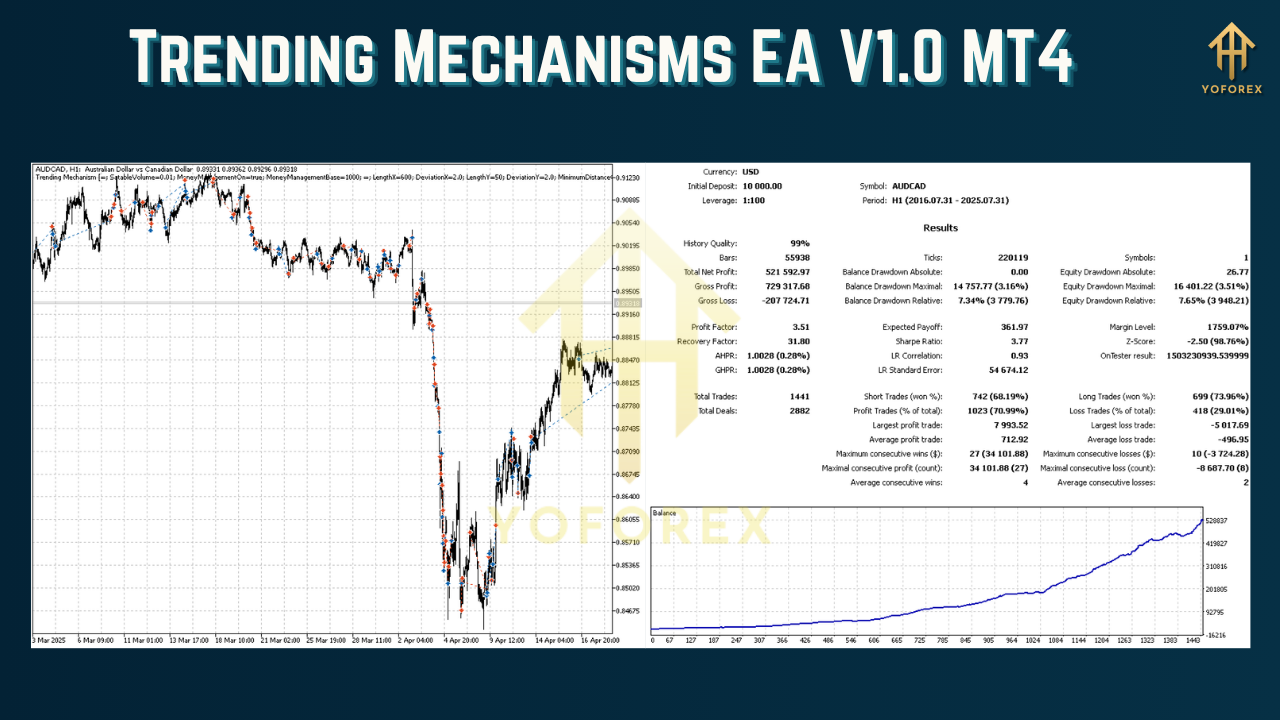
Selecting and Using Trending Mechanism EAs Effectively
Choosing the right Expert Advisor and using it effectively requires careful consideration and proper setup. Traders should approach this process methodically to maximize the potential benefits of automated trading.
Key Factors to Consider When Selecting an EA
When selecting an Expert Advisor with trending mechanisms, several factors should be taken into account:
-
Trading Style Alignment: The EA’s strategy should align with your personal trading style and objectives. For instance, a trend follower might prefer an EA that emphasizes trend following, while a scalper might look for an EA designed for short-term trades.
-
Performance History: Examine the EA’s performance history, preferably over different market conditions. Look for consistent results rather than exceptional performance in a single period.
-
Risk Management Features: Ensure that the EA includes robust risk management features, such as appropriate stop-loss and take-profit levels, and position sizing based on account size and risk tolerance.
-
User Reviews and Feedback: Read user reviews and feedback to gain insights into real-world performance and any potential issues or limitations.
-
Customizability: Consider whether the EA allows for customization of parameters, enabling you to tailor the strategy to your specific needs and risk profile.
By carefully evaluating these factors, traders can select an EA that best suits their trading approach and objectives.
Essential Steps for Effective EA Usage
Once an EA is selected, several steps are essential for effective usage:
-
Thorough Backtesting: Before using the EA in live trading, perform thorough backtesting to evaluate its performance on historical data. This helps to identify any potential issues or areas for improvement.
-
Forward Testing: After backtesting, consider forward testing the EA on recent data to assess its performance in more current market conditions.
-
Parameter Optimization: Fine-tune the EA’s parameters to optimize its performance without overfitting to historical data. This balance is crucial for real-world effectiveness.
-
Risk Management Implementation: Ensure that the EA’s risk management features are properly configured, with appropriate stop-loss and take-profit levels based on your risk tolerance.
-
Continuous Monitoring: Regularly monitor the EA’s performance and be prepared to make adjustments as market conditions change. No trading strategy remains effective indefinitely without adaptation.
By following these steps, traders can maximize the potential benefits of using Expert Advisors with trending mechanisms.
Common Pitfalls to Avoid
When using Expert Advisors, several common pitfalls should be avoided:
- Overfitting: Be cautious of EAs that have been overly optimized for historical data. Such EAs often perform poorly in real-time trading due to their lack of adaptability to new market conditions.
- Unrealistic Expectations: Avoid setting unrealistic expectations for EA performance. Even the best EAs will experience drawdowns and losing trades. Understanding this is crucial for maintaining a healthy trading mindset.
- Lack of Diversification: Do not place all your trading eggs in one basket. Consider diversifying across different EAs or trading strategies to spread risk and potentially enhance overall performance.
- Ignoring Risk Management: Never overlook the importance of risk management. Proper risk control is essential for long-term trading success, especially when using automated systems.
- Insufficient Education: Ensure that you have a good understanding of how the EA works and how to use it effectively. Education is key to making informed decisions and avoiding costly mistakes.
By recognizing and avoiding these pitfalls, traders can navigate the world of Expert Advisors more effectively and increase their chances of successful automated trading.
Advanced Techniques for Optimizing Trending Mechanism EAs
To maximize the performance of Expert Advisors with trending mechanisms, traders can employ several advanced techniques that go beyond basic setup and usage.
Customization and Parameter Tuning
One of the most powerful ways to optimize an EA is through customization and parameter tuning. Most EAs offer various parameters that can be adjusted to tailor the strategy to specific market conditions or trading objectives.
Key aspects to consider in this process include:
-
Indicator Settings: Adjust the parameters of the indicators used in the EA, such as moving average periods or oscillator thresholds, to optimize their performance in current market conditions.
-
Entry and Exit Rules: Fine-tune the conditions for entering and exiting trades, ensuring that they align with your trading strategy and risk tolerance.
-
Position Sizing: Customize the position sizing logic to reflect your account size and risk parameters. This might involve adjusting lot sizes or using more sophisticated money management formulas.
-
Risk Management: Refine stop-loss and take-profit levels based on historical performance and current market volatility. This helps to balance risk and reward in each trade.
By carefully tuning these parameters, traders can adapt the EA to their specific needs and potentially enhance its performance.
Integration with Other Trading Tools and Indicators
Enhancing the functionality of an EA often involves integrating it with other trading tools and indicators. This integration can provide additional layers of analysis and decision-making.
Some common integrations include:
- External Indicators: Incorporate additional indicators not already included in the EA, such as volume profiles, oscillators, or custom indicators, to gain more comprehensive market insights.
- News Filters: Implement mechanisms to filter out trades around major news events, which can be particularly volatile and risky.
- Volatility Filters: Add volatility filters to adjust trading activity based on market conditions. For example, reducing position sizes during periods of high volatility or avoiding trades altogether during market hours with known high volatility.
- Sentiment Analysis: Integrate sentiment analysis tools to gauge market情绪 and adjust trading strategies accordingly. Positive or negative sentiment can influence trend strength and duration.
These integrations can help to create a more robust and adaptive trading system, capable of navigating various market scenarios more effectively.
Advanced Risk Management Strategies
Effective risk management is crucial for long-term success in trading, and Expert Advisors are no exception. Implementing advanced risk management strategies can significantly enhance the performance and longevity of an EA.
Some advanced risk management techniques include:
- Dynamic Position Sizing: Rather than using fixed position sizes, implement dynamic sizing based on market conditions, account size, and risk tolerance. For example, using larger position sizes in stronger trends and smaller sizes in weaker trends or during periods of high volatility.
- Martingale and Anti-Martingale Systems: While traditional Martingale systems (doubling down on losses) can be risky, modified versions or Anti-Martingale systems (increasing position sizes on winning trades) can be used cautiously to potentially maximize profits from strong trends.
- Trailing Stops: Implement trailing stop mechanisms that adjust dynamically based on price movement. This allows for capturing profits as prices move in the desired direction while protecting against potential reversals.
- Portfolio Diversification: Rather than relying on a single EA, consider using multiple EAs with different strategies or parameters. This diversification can help to spread risk and potentially smooth out performance fluctuations.
By implementing these advanced risk management strategies, traders can create a more resilient and profitable trading system.
Continuous Learning and Adaptation
The financial markets are constantly evolving, and what works today may not work tomorrow. Continuous learning and adaptation are essential for maintaining the effectiveness of Expert Advisors with trending mechanisms.
Key aspects of this ongoing process include:
- Market Study: Regularly study market conditions, identifying any changes or emerging patterns that might affect the performance of your EA.
- EA Updates: Keep your EA up-to-date with the latest versions and patches provided by the developers. These updates often include improvements and fixes based on user feedback and changing market conditions.
- Performance Analysis: Regularly analyze the EA’s performance, looking for any signs of deterioration or areas for improvement. This analysis should consider both overall profitability and specific trade outcomes.
- Strategy Refinement: Based on your observations and analysis, refine your trading strategy and adjust the EA’s parameters accordingly. This might involve emphasizing certain aspects of the strategy or introducing new elements to address identified weaknesses.
By embracing a mindset of continuous learning and adaptation, traders can ensure that their Expert Advisors remain effective in the ever-changing landscape of financial markets.