

USDJPY AUTOBOT EA V1.0 MT4: A Comprehensive Guide to Automated Forex Trading
Introduction
The world of forex trading has undergone a significant transformation with the advent of automated trading systems, commonly known as Expert Advisors (EAs). These software tools, designed to operate on platforms like MetaTrader 4 (MT4), enable traders to execute trades automatically based on predefined algorithms, eliminating the need for constant manual intervention. Among the myriad of EAs available, the USDJPY AUTOBOT EA V1.0 MT4 has garnered attention for its focus on the USD/JPY currency pair, a staple in the forex market due to its high liquidity and volatility. This blog delves into the intricacies of the USDJPY AUTOBOT EA V1.0, exploring its features, strategies, performance, installation process, and critical considerations for traders looking to leverage this tool in 2025.
Understanding the USDJPY AUTOBOT EA V1.0
The USDJPY AUTOBOT EA V1.0 is an automated trading robot designed specifically for the MetaTrader 4 platform, targeting the USD/JPY currency pair. This EA is engineered to capitalize on short-term price movements, often employing a scalping strategy that aims to capture small, frequent profits. Scalping, a popular trading technique, involves entering and exiting trades within minutes, leveraging the rapid price fluctuations inherent in the USD/JPY pair. The EA’s algorithm analyzes market conditions using technical indicators and price action to identify optimal entry and exit points, aiming to maximize profitability while managing risk.
Key Features
-
Scalping Strategy: The USDJPY AUTOBOT EA V1.0 is primarily a scalping bot, designed to execute trades on short timeframes, such as the 1-minute (M1) chart. This approach allows it to exploit minor price movements, which are frequent in the USD/JPY pair due to its high trading volume.
-
Automated Trade Execution: Once installed, the EA operates autonomously, placing and managing trades based on its programmed logic. This eliminates emotional bias, a common pitfall in manual trading, and ensures consistent execution.
-
Risk Management: The EA incorporates stop-loss (SL) and take-profit (TP) mechanisms to mitigate potential losses. Some versions may also include trailing stops to lock in profits as trades move in a favorable direction.
-
Low Minimum Deposit: According to some sources, the USDJPY AUTOBOT EA requires a minimum deposit as low as $50, making it accessible to traders with limited capital.
-
Lifetime License: Unlike some EAs that require recurring subscriptions, the USDJPY AUTOBOT EA is marketed with a lifetime license, meaning no expiration date for its use.
-
Customizable Settings: Traders can adjust parameters such as lot size, risk levels, and trading hours to align with their risk tolerance and trading goals.
How the USDJPY AUTOBOT EA Works
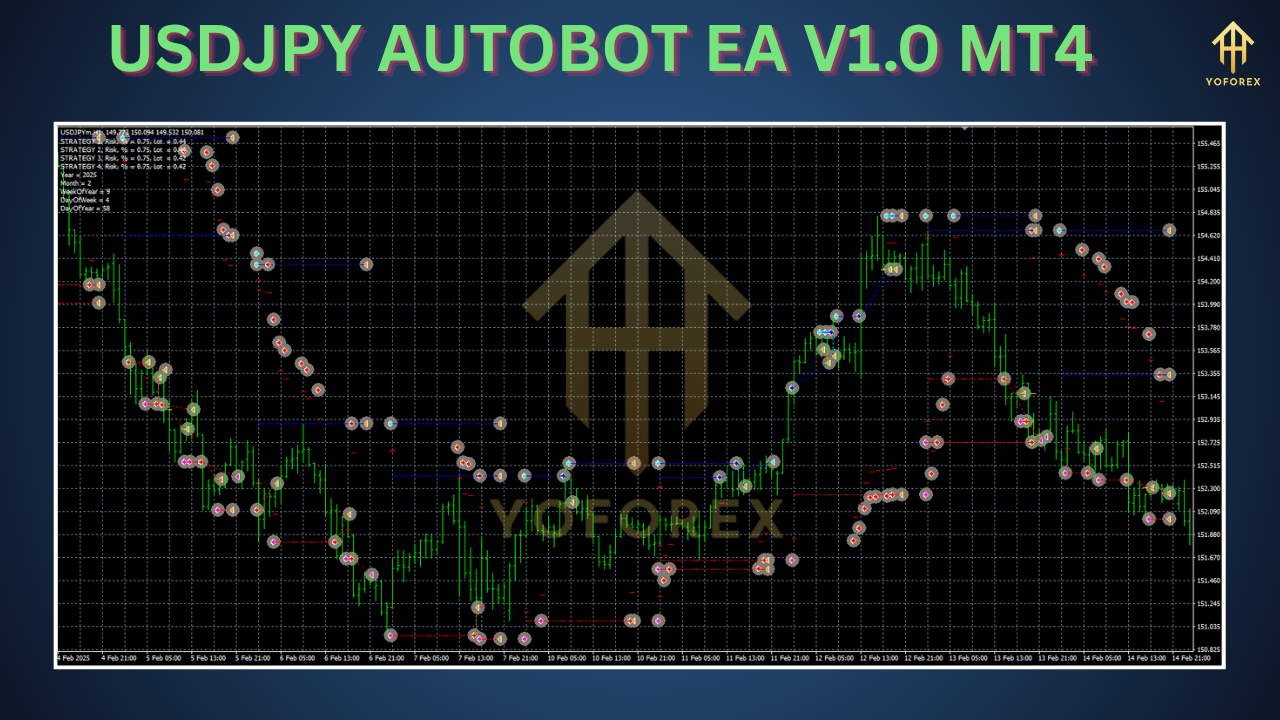
The USDJPY AUTOBOT EA V1.0 operates by analyzing market data through a combination of technical indicators and price action strategies. While the exact algorithm remains proprietary, it likely employs common indicators such as moving averages, Relative Strength Index (RSI), or Bollinger Bands to identify trends and reversals. The EA places trades automatically when predefined conditions are met, such as a breakout above a resistance level or a crossover of moving averages.
Trading Strategy
The EA’s scalping strategy focuses on the USD/JPY pair, which is known for its tight spreads and responsiveness to economic events, particularly those involving the U.S. and Japanese economies. The bot may operate on the following principles:
-
Trend-Following: Identifying short-term trends in the USD/JPY pair and entering trades in the direction of the trend.
-
Reversal Trading: Detecting overbought or oversold conditions to capitalize on price corrections.
-
News Avoidance: Some EAs, including potentially the USDJPY AUTOBOT, incorporate news filters to avoid trading during high-impact economic events, reducing exposure to volatility spikes.
The EA’s ability to execute trades swiftly on the 1-minute timeframe makes it suitable for traders seeking quick profits, though this approach carries inherent risks due to the fast-paced nature of scalping.
Installation and Setup
Installing the USDJPY AUTOBOT EA V1.0 on the MT4 platform is straightforward, following a standard procedure for Expert Advisors. Here’s a step-by-step guide based on industry practices:
-
Download the EA: Obtain the USDJPY AUTOBOT EA V1.0 file (typically a .ex4 file) from a reputable source. Ensure the source is trustworthy to avoid malware or fraudulent software.
-
Access MT4 Data Folder:
-
Open MetaTrader 4.
-
Click on File > Open Data Folder in the top menu.
-
Navigate to the MQL4 > Experts folder.
-
-
Install the EA:
-
Copy the .ex4 file into the Experts folder.
-
If the EA includes custom indicators, place them in the MQL4 > Indicators folder.
-
-
Restart MT4: Close and reopen the MetaTrader 4 platform to ensure the EA is recognized.
-
Attach to Chart:
-
In the Navigator window (accessible via View > Navigator or Ctrl+N), locate the USDJPY AUTOBOT EA under the Expert Advisors section.
-
Drag and drop the EA onto a USD/JPY chart (preferably M1 for scalping).
-
A settings window will appear, allowing you to configure parameters like lot size, SL, TP, and risk settings.
-
-
Enable Automated Trading:
-
Go to Tools > Options > Expert Advisors tab.
-
Check the box for Allow automated trading.
-
Ensure the AutoTrading button on the MT4 toolbar is enabled (it should be green).
-
-
Verify Settings: Confirm that the EA’s settings align with your trading strategy and risk tolerance. For example, set the lot size to 0.01 for a $50 account to minimize risk.
Once configured, the EA will begin analyzing the USD/JPY chart and executing trades based on its algorithm.
Performance and Claims
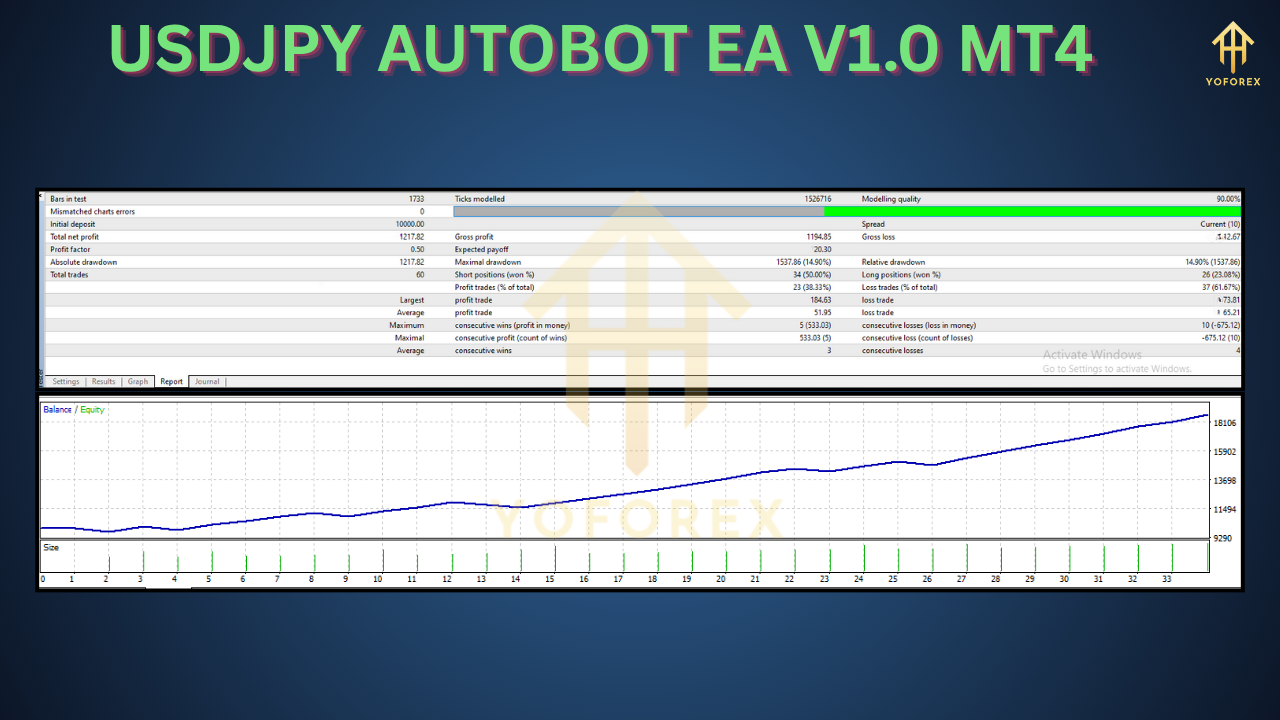
The USDJPY AUTOBOT EA V1.0 is marketed with bold claims, such as the potential to generate 700% profits with a minimum deposit of $50. However, such claims should be approached with caution, as they often lack verified evidence. The forex market is inherently volatile, and past performance does not guarantee future results.
Backtesting and Live Results
Reputable EAs, like Forex Robotron or Waka Waka, provide verified backtesting results using real tick data and live trading accounts tracked on platforms like Myfxbook. Unfortunately, specific backtesting or live trading results for the USDJPY AUTOBOT EA V1.0 are scarce in the provided sources, raising concerns about its reliability. Traders are advised to conduct their own backtests using the MT4 Strategy Tester to evaluate the EA’s performance under historical market conditions.
User Feedback
Limited user reviews are available for the USDJPY AUTOBOT EA V1.0. One concerning report on Forex Peace Army describes a negative experience with the EA’s vendor, alleging non-delivery of promised services after payment and additional requests for funds to connect the bot to a VPS. This highlights the importance of due diligence when selecting an EA provider.
Risks and Considerations
While the USDJPY AUTOBOT EA V1.0 offers potential benefits, automated trading carries significant risks that traders must consider:
-
Market Volatility: The USD/JPY pair is sensitive to economic events, such as U.S. Federal Reserve or Bank of Japan policy announcements. Sudden volatility spikes can lead to significant losses, especially for scalping EAs.
-
Over-Optimization: Some EAs perform exceptionally well in backtests but fail in live trading due to over-optimization for specific market conditions. Traders should test the EA in a demo account before risking real capital.
-
Vendor Reliability: The lack of transparent, verified results and reports of poor vendor communication raise red flags. Always purchase EAs from reputable sources with clear refund policies and customer support.
-
Risk Management: Scalping strategies often involve high-frequency trading, which can amplify losses if not properly managed. Ensure the EA’s risk settings (e.g., SL, TP, lot size) align with your account size and risk tolerance.
-
Broker Compatibility: The EA’s performance may vary depending on the broker’s spreads, execution speed, and trading conditions. Choose a broker with low spreads for USD/JPY and reliable execution.
Best Practices for Using USDJPY AUTOBOT EA
To maximize the effectiveness of the USDJPY AUTOBOT EA V1.0, consider the following best practices:
-
Start with a Demo Account: Test the EA in a demo environment for at least 30 days to assess its performance without risking real money.
-
Optimize Settings: Adjust the EA’s parameters based on backtesting results and current market conditions. Avoid overly aggressive settings that could lead to significant drawdowns.
-
Use a VPS: A Virtual Private Server ensures the EA runs 24/7 without interruptions, critical for scalping strategies that require constant market monitoring.
-
Monitor Performance: Regularly review the EA’s performance and adjust settings as needed. Be prepared to disable the EA during major news events to avoid unexpected losses.
-
Diversify Strategies: Combine the USDJPY AUTOBOT EA with other trading strategies or EAs to diversify risk and avoid over-reliance on a single system.
Comparison with Other Forex EAs
The USDJPY AUTOBOT EA V1.0 competes with established EAs like Forex Robotron, Waka Waka, and Forex Flex EA, which boast verified track records and extensive user bases. For example, Forex Robotron claims a high win rate across multiple currency pairs, backed by Myfxbook-verified results, while Waka Waka has a 61-month profitable track record. In contrast, the USDJPY AUTOBOT EA lacks similar transparency, making it a riskier choice for traders seeking proven performance.
Conclusion
The USDJPY AUTOBOT EA V1.0 MT4 offers an accessible entry point for traders interested in automating their USD/JPY trading. Its scalping strategy, low minimum deposit, and lifetime license make it appealing, particularly for novice traders. However, the lack of verified performance data and concerning user feedback underscore the need for caution. Traders should thoroughly test the EA in a demo account, verify the vendor’s credibility, and ensure robust risk management before deploying it in live trading. In the dynamic world of forex, automated tools like the USDJPY AUTOBOT EA can enhance efficiency, but success hinges on careful planning, continuous monitoring, and a realistic understanding of the risks involved.
For those considering the USDJPY AUTOBOT EA V1.0, start with a demo account, leverage backtesting, and stay informed about market conditions. By combining the EA’s automation with prudent trading practices, you can potentially harness its capabilities to achieve consistent results in the USD/JPY market.