

Swing trading represents a strategic approach to market participation that sits between the rapid-fire transactions of day trading and the long-term holding periods of investment. For traders employing this medium-term strategy, identifying optimal entry and exit points is crucial. MetaTrader 4 (MT4), one of the most widely used trading platforms globally, offers powerful tools and indicators designed specifically for swing trading. This comprehensive guide explores the essential indicators available within MT4 for swing traders, their applications, and how they can be effectively integrated into trading strategies to capture market swings profitably.
Understanding Swing Trading and Its Indicators
Swing trading is a strategy that focuses on capturing a smaller portion of a larger move—the “swings” within longer-term trends. Unlike day trading, which requires entering and exiting trades within the same day, swing trading typically involves holding positions for a few days up to a few weeks . This approach allows traders to participate in market movements without the intense time commitment required for day trading, while still benefiting from more frequent opportunities than long-term investing.
The effectiveness of swing trading heavily depends on the ability to identify potential trend reversals and high-amplitude price movements while disregarding short-term corrections. This is where technical indicators play a crucial role. They provide objective criteria for entry and exit decisions, helping traders avoid emotional decision-making that can lead to costly mistakes.
When selecting indicators for swing trading, it’s important to consider tools that can identify trend direction, potential reversals, and optimal entry and exit points. While many traders develop their own custom indicators, there are several well-established options available for MT4 that have proven effective for swing trading. These range from general-purpose indicators like moving averages and RSI to specialized swing trading indicators designed specifically for this trading approach.
Essential General-Purpose Indicators for Swing Trading
Several general-purpose technical indicators are particularly well-suited for swing trading due to their ability to identify trends, reversals, and optimal entry/exit points. These indicators form the foundation of many swing trading strategies and can be effectively combined with other tools for confirmation.
Moving Averages: The Backbone of Trend Identification
Moving averages are perhaps the most fundamental indicator for swing trading, providing a smoothed representation of price data that helps identify the underlying trend. They work by averaging out price data over a specified period, filtering out the noise and volatility that can mislead traders.
In swing trading, moving averages are often used to determine the overall direction of the trend. A common strategy involves using two moving averages of different durations (such as 50-day and 200-day), with crossovers between these averages signaling potential trend changes. For instance, when a shorter-term moving average crosses above a longer-term moving average, it may indicate the start of an uptrend—a potential buying opportunity for swing traders .
Traders employing swing strategies often look for pullbacks to the moving average within an established trend, using these as potential entry points with a higher probability of success. The moving average serves as a dynamic support or resistance level, offering clearer guidance than static levels based on previous price highs or lows.
Relative Strength Index (RSI): Measuring Market Momentum
The Relative Strength Index (RSI) is a momentum oscillator that measures the speed and change of price movements. It oscillates between 0 and 100, with readings above 70 considered overbought and readings below 30 considered oversold .
For swing traders, RSI is particularly useful for identifying potential reversals. When the market is trending upward but RSI starts to decline, it may signal that the upward movement is losing steam—a potential sell signal. Conversely, when the market is trending downward but RSI begins to rise, it could indicate that downward pressure is easing, possibly presenting a buying opportunity .
In swing trading strategies, RSI is often used in conjunction with other indicators to confirm signals and reduce false positives. For example, a potential reversal indicated by RSI might be confirmed by a corresponding pattern in price movement or another indicator.
Bollinger Bands: Identifying Volatility and Potential Breakouts
Bollinger Bands consist of a moving average and two standard deviation lines that create a volatility channel around the price. When the market is trending strongly, prices tend to move along the outer band, while periods of consolidation see prices moving within the channel.
For swing traders, Bollinger Bands offer several potential signals. A breakout above the upper band can indicate a strong uptrend, while a break below the lower band may signal a significant downtrend. Additionally, when the bands narrow, it can indicate a period of low volatility that may be followed by a significant price movement—a potential swing trading opportunity .
Traders often look for “reversal bounces” where the price touches one of the bands and then reverses direction, creating a potential entry point with the trend. These bounces can be particularly reliable signals for swing trading strategies.
Average True Range (ATR): Managing Risk and Position Sizing
While not directly indicating price direction, the Average True Range (ATR) measures market volatility and can be invaluable for swing traders in risk management and position sizing. ATR quantifies the range of price movement, helping traders understand the typical daily price variation for a particular market.
In swing trading, ATR can help determine appropriate stop-loss levels and position sizes based on volatility. Higher ATR values indicate greater price movement potential, which can be particularly useful for swing traders looking to capture medium-term trends. Conversely, lower ATR values may suggest a period of consolidation, potentially indicating a pause in a swing before it resumes .
By incorporating ATR into their strategy, swing traders can better manage risk, ensuring that potential losses remain manageable while allowing profitable trades to run in the direction of the swing.
Parabolic SAR: Confirming Trends and Identifying Reversals
The Parabolic SAR (Stop and Reverse) indicator helps identify potential trend reversals and confirm the direction of the trend. It plots dots on the price chart; when the price crosses these dots, it can signal a trend reversal .
For swing traders, Parabolic SAR is particularly useful because it helps them stay in a trade for a few days or weeks—the typical time frame for swing trading. By identifying when a trend is likely to reverse, swing traders can exit positions before potential losses develop .
The Parabolic SAR adjusts dynamically based on price movement, becoming more sensitive as the trend progresses. This allows it to provide increasingly timely signals as the swing develops, making it an effective tool for confirming both entry and exit points in swing trading strategies.
Specialized Swing Trading Indicators for MT4
While general-purpose indicators form the foundation of many swing trading strategies, MT4 offers several specialized indicators specifically designed for swing trading. These tools are engineered to identify potential swing opportunities with greater precision, often incorporating elements from multiple indicators into a single, cohesive system.
PZ Swing Trading Indicator: Precision in Swing Detection
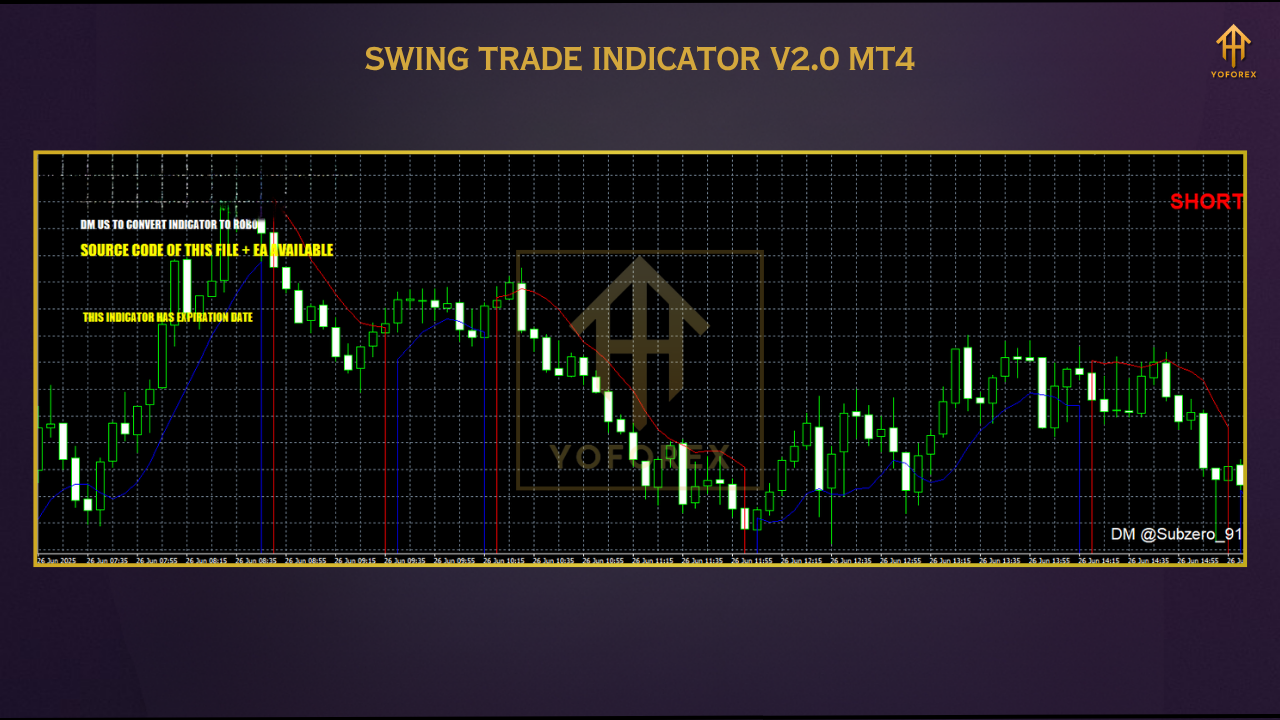
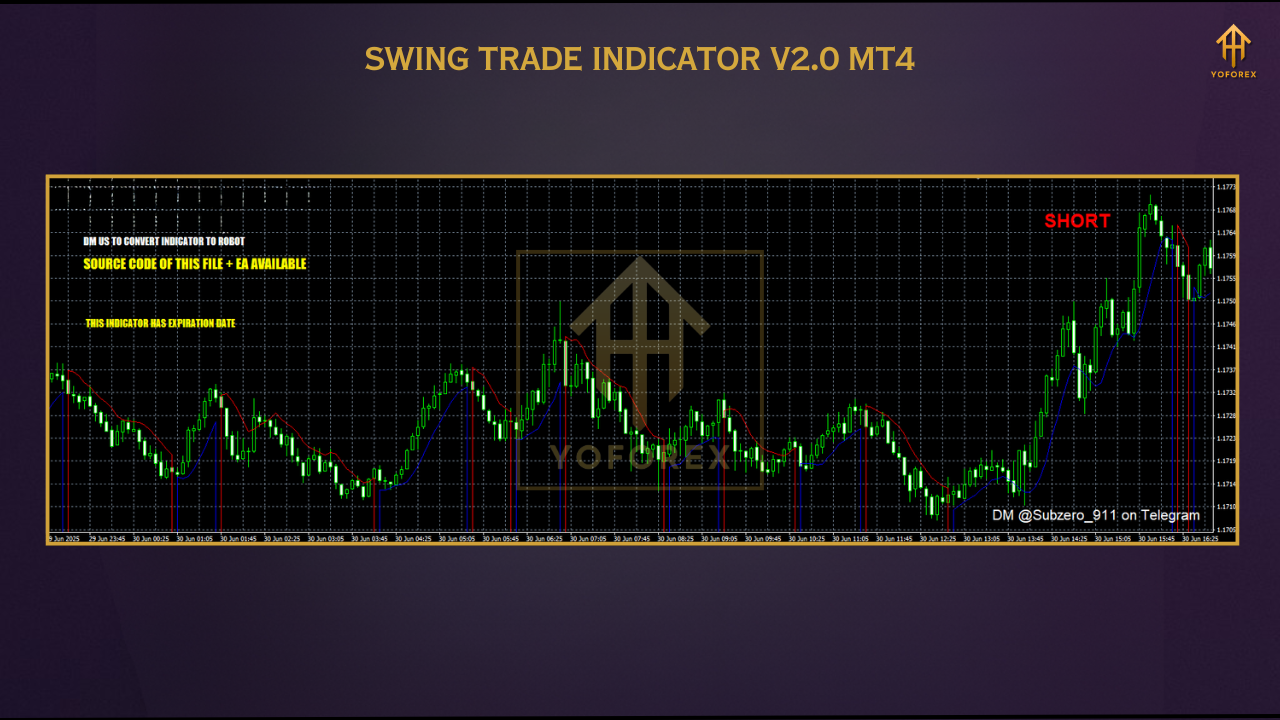
The PZ Swing Trading Indicator is specifically designed to detect swing movements that follow the prevailing trend, as well as potential reversal swings. Unlike general indicators that may provide signals based on short-term fluctuations, this indicator focuses on filtering out market noise to provide clearer signals .
Key features of the PZ Swing Trading Indicator include:
- Detection of swing entries in the direction of the prevailing trend
- Colored baseline showing optimal buy/sell zones based on price exhaustion
- Reversal dashes highlighting oversold or overbought conditions
- Customizable trend and baseline sensitivity for different symbols or timeframes
- Real-time, non-repainting signals for accurate trade planning
This indicator offers visual guidance and alert-driven signals, helping traders act decisively when the market presents an opportunity. Whether buying after a sell-off or shorting into strength, the PZ Swing Trading Indicator provides a clear edge in timing and execution across various asset classes and timeframes .
Professional Swing Indicator: Color-Coded Clarity
The Professional Swing Indicator for MT4 uses a straightforward visual approach to present BUY and SELL signals through colored bars. The indicator paints purple bars above the zero line (indicating BUY signals) and blue bars below the zero line (indicating SELL signals) .
This visual clarity makes the indicator particularly useful for beginners, providing an easily interpretable guide to market direction. The indicator includes a 12-line that serves as an important consideration for signal strength:
- When purple bars (BUY signals) go above the 12-line, it suggests a strong buy signal
- When blue bars (SELL signals) go below the 12-line, it indicates a strong sell signal
The Professional Swing Indicator is designed to detect market lows and highs accurately, making it a valuable tool for identifying potential swing opportunities. Its simplicity and visual nature make it accessible even to traders who may find more complex indicators overwhelming .
Swing Failure Pattern Indicator: Identifying Fake Breakouts
The Swing Failure Pattern (SFP) Indicator helps identify reversal patterns in the market, specifically looking for instances where the price falsely breaks through a previous high or low with the body of a candlestick. This “fake breakout” triggers liquidity areas and stop-losses, creating potential trading opportunities.
Key features of the SFP Indicator include:
- Identification of fake breakouts through previous high or low areas
- Triggering of liquidity areas and stop-losses
- Alerts for potential reversal points
By detecting these failure patterns, the indicator helps traders avoid false signals and potential losses from chasing false breakouts. Instead, it provides opportunities to trade the resulting reversal or correction, which can align well with swing trading strategies that look to capture medium-term price movements.
Swing Point Highs and Lows Indicator: Recent Swing Identification
The Swing Point Highs and Lows Indicator is designed to identify recent swings in market prices. By applying the indicator, traders can easily determine when to go long or short based on the most recent price extremes .
This indicator helps traders understand the market’s recent behavior by highlighting the highest and lowest points of recent price movements. By identifying these swing points, traders can better position themselves to capture the next swing in the market’s direction.
The visual representation of swing points provides immediate feedback on price behavior, helping traders make more informed decisions about potential entry and exit points for their swing trades.
Advanced Techniques for Effective Swing Trading with Indicators
While understanding individual indicators is important, the true power comes from combining multiple indicators to create a robust swing trading strategy. This multi-indicator approach helps reduce false signals and provides greater confidence in trading decisions.
Indicator Confirmation and Divergence Detection
One of the most effective ways to use multiple indicators is through confirmation. By looking for agreement between different indicators, traders can filter out false signals and increase the reliability of their trading decisions .
For example, a potential buy signal from moving averages might be confirmed by a bullish divergence in RSI, where the price is making lower lows while RSI is making higher lows. This confirmation across multiple indicators suggests a strong potential for a swing upward .
Similarly, divergence between price and an indicator can signal potential reversals. When price reaches a new high but the indicator fails to do the same, it may indicate waning upward momentum—a potential sell signal for swing traders .
Setting Up Alerts and Notifications
In swing trading, timing can be critical, especially when entering or exiting positions at specific points. Setting up alerts and notifications for key indicator signals can help traders capture opportunities without having to monitor the markets continuously .
Many specialized swing trading indicators for MT4 offer alert functionality, providing sound, email, visual, or push notifications when specific conditions are met. These alerts can be particularly valuable for swing traders who may not be actively monitoring the markets during potential entry or exit points .
By setting up well-defined alert criteria based on indicator signals, swing traders can ensure they don’t miss potential opportunities while maintaining a healthy work-life balance.
Backtesting and Strategy Optimization
Before implementing a swing trading strategy with specific indicators, it’s crucial to backtest the strategy using historical data. This process involves testing the strategy on past market conditions to see how it would have performed, providing valuable insights into its potential effectiveness .
When backtesting, traders should look for consistent performance across different market conditions, not just during periods that align with their current market view. A robust swing trading strategy should perform well during trending markets, ranging markets, and periods of high volatility .
Based on backtesting results, traders can optimize their indicator settings to maximize performance while minimizing false signals. This optimization process is essential for creating a swing trading strategy that is both effective and reliable.
Risk Management and Position Sizing
Even the most sophisticated indicators and strategies can fail if not accompanied by proper risk management. In swing trading, where positions are held for multiple days, effective risk management becomes even more critical .
Risk management involves determining the appropriate position size based on account size, risk tolerance, and market volatility (which can be measured using indicators like ATR). By limiting potential losses to a predetermined percentage of the account, swing traders can protect their capital and increase the sustainability of their trading approach .
Additionally, stop-loss orders should be placed at logical points based on indicator signals or key support/resistance levels. These stops help limit potential losses while allowing profitable trades to run in the direction of the swing .
Common Challenges and Solutions in Swing Trading with Indicators
While indicators can greatly enhance the effectiveness of swing trading, they are not without their challenges. Understanding these challenges and implementing strategies to address them can significantly improve trading outcomes.
Dealing with Market Noise and False Signals
One of the primary challenges in swing trading is filtering out market noise and false signals that can lead to unnecessary trades and losses. This is particularly relevant for general-purpose indicators that may generate signals based on short-term fluctuations rather than meaningful trend changes .
Specialized swing trading indicators like the PZ Swing Trading Indicator are specifically designed to filter out market noise, providing clearer signals based on longer-term price movements. Alternatively, traders can apply filters to general indicators, such as waiting for signals to persist for a certain number of bars or to meet specific strength criteria.
Combining multiple indicators and looking for confirmation across different tools can also help reduce false signals. By requiring agreement between indicators, traders can increase the reliability of their trading signals and make more confident decisions .
Managing Emotions and Discipline
Even with the best indicators and strategies, emotional decision-making can undermine success in swing trading. Fear of missing out (FOMO) or fear of losses can lead traders to enter trades without proper signals or to exit prematurely, missing the full potential of a swing .
A well-defined trading plan based on indicator signals can help manage emotions by providing clear rules for entry and exit. By sticking to these rules rather than making decisions based on emotion, traders can maintain discipline and increase their chances of success .
Setting up automated alerts based on indicator signals can also help maintain discipline by providing objective triggers for action, reducing the temptation to make subjective decisions based on emotion.
Adapting to Changing Market Conditions
Markets are dynamic, with conditions changing over time. What works in a trending market may not be effective in a ranging market, and strategies that perform well during normal market conditions may fail during periods of high volatility or market shocks .
To address this challenge, swing traders should develop a flexible approach that can adapt to changing market conditions. This might involve adjusting indicator settings, switching between different indicator combinations, or modifying entry/exit criteria based on current market behavior.
Regular review and refinement of strategies based on performance and changing market conditions is essential for long-term success in swing trading. By staying alert to market changes and being willing to adapt, traders can maintain the effectiveness of their indicator-based strategies.
Conclusion: Mastering the Art of Swing Trading with MT4 Indicators
Swing trading with MT4 indicators offers a powerful approach for capturing medium-term price movements while managing risk and reducing emotional decision-making. By understanding the fundamental indicators like moving averages, RSI, Bollinger Bands, ATR, and Parabolic SAR, traders can build a solid foundation for their swing trading strategies.
Specialized indicators like the PZ Swing Trading Indicator, Professional Swing Indicator, and Swing Failure Pattern Indicator provide additional tools for identifying potential swing opportunities with greater precision. When combined with general-purpose indicators and used with proper confirmation, these specialized tools can significantly enhance trading performance.
Key to success in swing trading is a disciplined approach based on well-defined rules and criteria derived from indicator signals. By setting up alerts, managing risk effectively, and continuously refining strategies based on performance, traders can maximize the potential of swing trading with MT4 indicators.
Ultimately, mastery of swing trading requires both knowledge of the indicators and the markets, as well as the discipline to follow a systematic approach. With the right indicators, strategies, and mindset, swing trading can provide a rewarding and profitable approach to market participation.