

EA PA V2.0 MT4 — Overview & Recommended Settings
“EA PA V2.0 MT4” (often called “PA EA v2.0”) is an Expert Advisor built for MetaTrader 4. It is designed to automate trading decisions based on the developer’s strategy (price action, internal logic, or proprietary indicators). The EA handles entries, exits, risk management, and trade execution automatically, so the trader doesn’t need to intervene manually (aside from monitoring and occasional parameter tweaks).
While full documentation from the developer is preferred, here’s a typical recommended configuration—derived from how many EAs are structured—and suggestions you can start with.
Time Frames
The EA is often set to run on lower to medium timeframes where market movements are more responsive but noise is manageable. Common timeframes include:
M5 (5-minute)
M15 (15-minute)
H1 (1-hour)
You may test on all three to see which yields more stable results in your broker’s environment. For example, many portfolio EAs are optimized for M15 or H1 charts.
During backtesting or live deployment, some users might also test M30 or M5 if volatility is favorable—but starting with M15 or H1 gives a balance between signal frequency and reliability.
Currency Pairs
The EA can typically be used across major and minor forex pairs. Recommended pairs include:
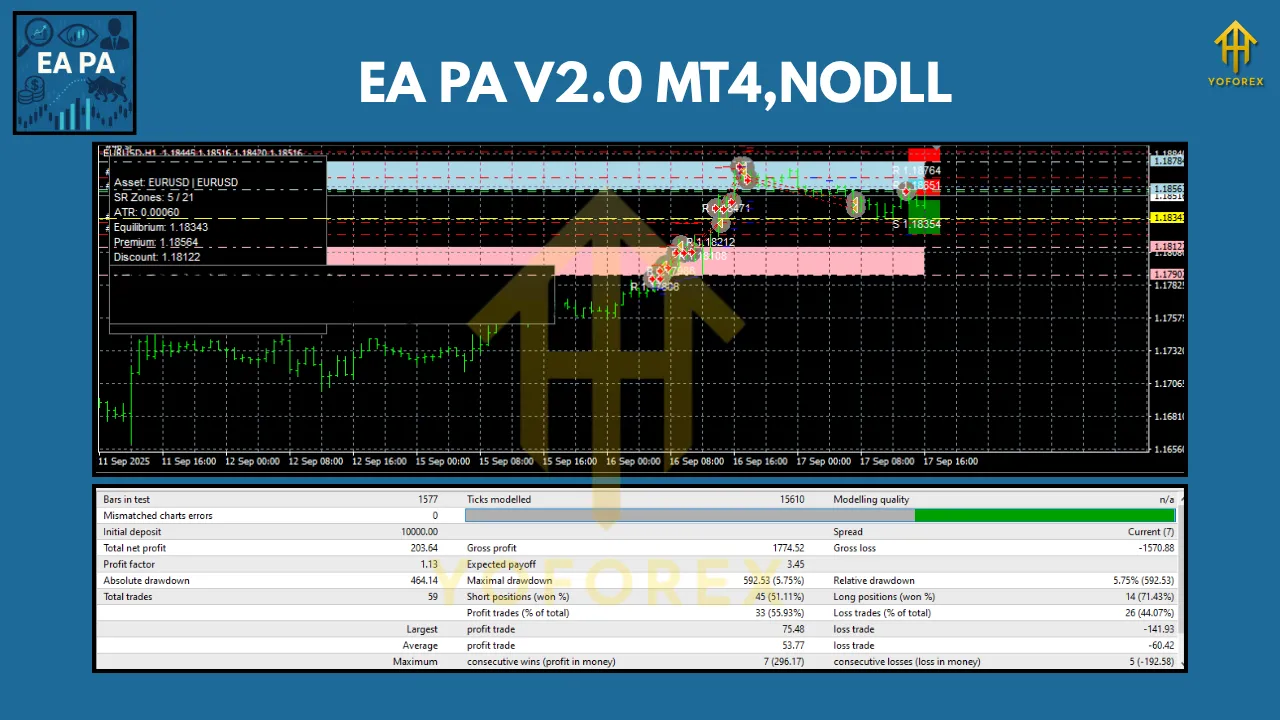
EURUSD
USDJPY
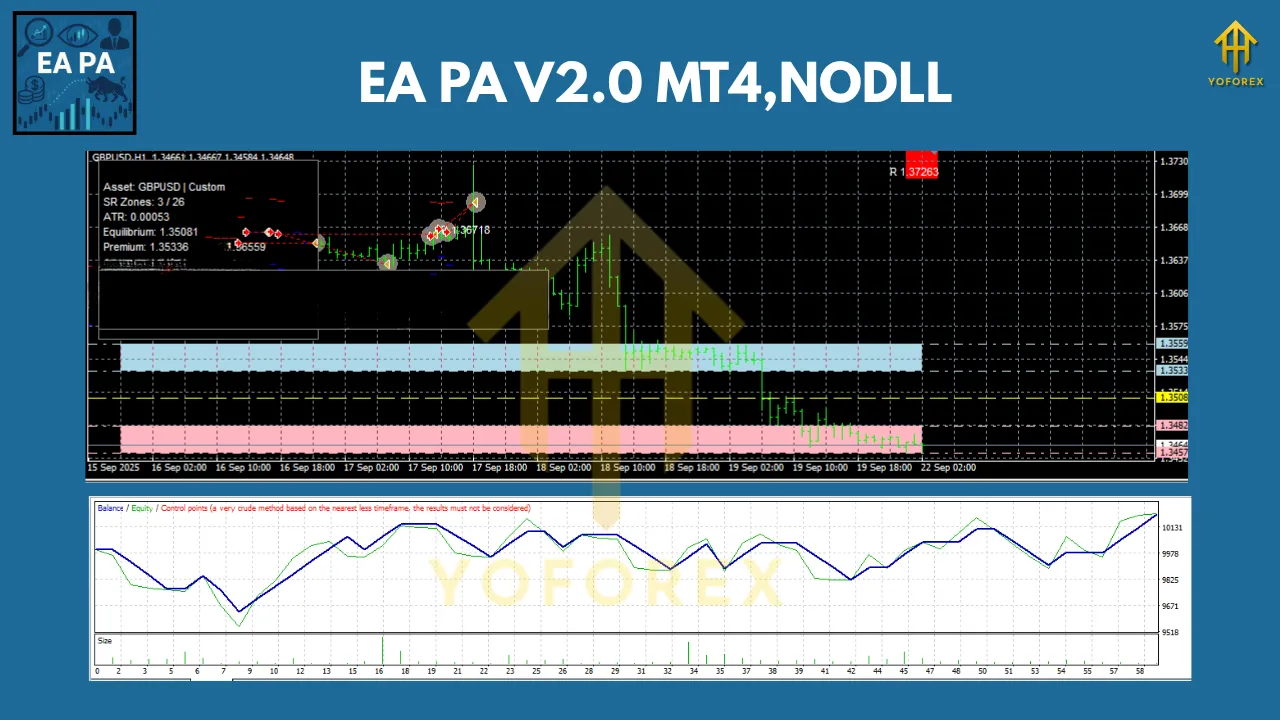
GBPUSD
AUDUSD
USDCHF
It may also work on cross pairs (e.g. EURGBP, AUDNZD) or exotic pairs, depending on how the EA’s internal filters are coded. But as a best practice, begin with liquid pairs (majors) to minimize slippage and spread costs.
Deposit Requirements & Risk
Minimum / Recommended deposit: USD 1,000
This is likely what the developer suggests to allow sufficient margin and risk buffer.Some versions may allow running on smaller amounts, but results will be more volatile and drawdowns can be more severe.
Make sure to:
Use proper risk per trade (for example 0.5 % to 2 % of equity)
Limit maximum drawdown
Use a VPS to keep MT4 online 24/5
Monitor spread, slippage, and broker execution quality
Example Settings & Parameter Suggestions
Below is a mock-up of parameter settings you might try. These are illustrative; you’ll need to calibrate them:
| Parameter | Suggested Value / Range |
|---|---|
| Timeframe | M15 (or test M5 / H1) |
| Risk per trade | 0.5 % – 1 % of account balance |
| Max open trades | 1–3 (total across all pairs) |
| Stop Loss (SL) | e.g. 50 pips or dynamic based on volatility |
| Take Profit (TP) | 1.5× to 2.5× SL, or dynamic TP logic |
| Trade hours | e.g. from Session Start to Session End (e.g. 00:00 to 23:59) |
| Trade days | Enable Monday to Friday, disable weekends |
| Slippage limit | e.g. 3–5 pips |
| Max drawdown trigger | e.g. 10 % or 15 % daily/weekly |
| Lot sizing mode | Fixed lot / risk-based / percent of balance |
When you run backtests or forward testing, you may find certain pairs or timeframes outperform—adjust accordingly.
Advantages & Risks
Advantages:
Automated trading — removes emotional decisions
24/5 operation — captures opportunities even when you’re offline
Consistent logic and discipline — always applies the same rules
Easy to test and optimize — you can backtest historical data
Risks:
Over-optimization / curve fitting — risk that the EA is too finely tuned to past data
Broker execution / slippage — spreads and latency may degrade performance
Market regime changes — the EA might perform poorly in strong trends or unexpected events
Technical issues — server downtime, platform crashes, disconnections
To mitigate risks:
Use small lot sizing initially
Monitor performance monthly
Use drawdown limits or stop trading if performance deteriorates
Use a reliable VPS and broker
Testing & Optimization Tips
Forward test on demo / small live account before deploying large capital
Walk-forward analysis to validate settings over unseen data
Use Monte Carlo testing (if available) to simulate variability
Keep logs and performance reports (balance, equity, drawdowns)
Periodically update or re-optimize parameters when market conditions shift